
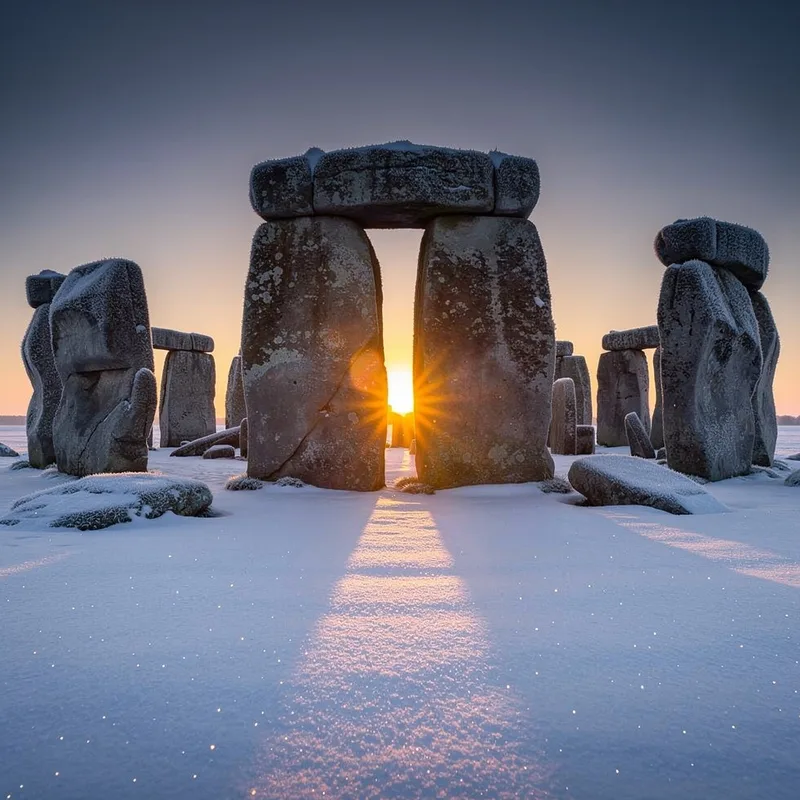
winter solstice
 8
4.8
8
4.8

- noun
- /ˈwɪntər ˈsɒlstɪs/
- "Well, it came on the winter solstice, which seemed fitting."
- the winter solstice sun
- time of the winter solstice
- the winter solstice day
Loading YouTube…
Watch on YouTubeSo basically the winter solstice, they would bring in the trees and they into their homes, and then they would put red balls on them.
- So basically the winter solstice, they would bring in the trees and they into their homes, and then they would put red balls on them.
- He was the first Christian to declare that Christ was born at the end of the winter solstice.
- Don't think too big, OK, something closer to home that I'm going to be doing for like the winter solstice Christmas time, OK.
- And, and again, this ties into the satanic thing because Tiny said New Year's Eve is a very big satanic holiday, as is Halloween, the winter solstice.
Examples
-
Maybe, around the winter solstice, we might have a big opening either way.
Blog text (6) -
Some archaeologists believe the winter solstice was more significant to the megaliths' builders.
Academic text (2008) -
Six months later, near the time of the winter solstice, we start the night the way we ended it in summer.
Academic text (1991) -
Warm wishes to all as we approach the winter solstice.
-
Starting on the winter solstice, 1990, there were four Medicine Bundle Ceremonies through the winter.
Academic text (1996) -
Yet now archaeologists claim the significant time was the winter solstice.
Academic text (2008) -
From the summer solstice to the winter solstice, the days become shorter and colder.
-
In contrast to the carnival atmosphere of the summer solstice festival, winter solstice is an occasion of near-private tranquility.
Academic text (2008) -
During Powamu (winter solstice), pahos, or prayer feathers, are given to people throughout the villages.
Academic text (2004) -
Many people gather to share stories and meals during the winter solstice celebration.
Antonyms
Surface Forms
Morphology
The phrase is a straightforward noun–noun composition: 'solstice' denotes the sun's extreme positions and 'winter' specifies the season, so 'winter solstice' is the solstice that occurs in winter. This compositional pattern is regular and cross-linguistically common, so a B1 learner who knows both constituents would readily infer the meaning.
Etymology
The term winter solstice comes from old words where solstice means the sun 'stands still', because around this time the sun seems to stop moving lower in the sky. That's why the term marks the shortest day and longest night of the year and the moment after which days slowly grow longer.