

summer solstice
 5
4.2
5
4.2

- noun
- /ˈsʌmər ˈsɒltɪs/
- On the summer solstice, the sun reaches its highest point in the sky, resulting in more daylight hours.
- summer solstice sunrise
- the sun on summer solstice
Loading YouTube…
Watch on YouTubeWe're suggesting that it the Serpent Mound's alignment to the summer solstice sunset is just slightly off.
- We're suggesting that it the Serpent Mound's alignment to the summer solstice sunset is just slightly off.
- We're coming up on summer solstice, and that's that long day, baby.
- Because remember, last summer solstice is when they had their first real kiss and it was like a happy, happy moment, right?
Examples
-
The summer solstice was not long past, and the weather was clear, warm, and windless.
Fiction book (2001) -
During the summer solstice, many cultures celebrate with festivals and rituals to honor the sun.
-
"There will probably be another party for the summer solstice."
Academic text (2006) -
The summer solstice will be in twenty days.
-
It's just after midnight, a few hours before sunrise on summer solstice, the longest day of the year.
Academic text (2003) -
From the summer solstice to the winter solstice, the days become shorter and colder.
-
The light has been steadily retreating each day since the summer solstice, the longest day and shortest night of the year.
Blog text (18) -
During last June's summer solstice, I joined the crowd at Stonehenge, estimated to be 24,000.
Academic text (2008) -
Interior Alaska around the summer solstice belies any descriptions of America's far north as desolate or inhospitable.
Academic text (2008) -
The summer solstice, occurring around June 21, marks the longest day of the year.
Synonyms
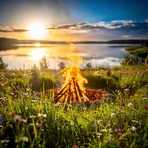 10
3.7
10
3.7
The time around June 21 in the northern hemisphere when the day is longest
 1
1.0
1
1.0
The day when the sun is farthest north and daylight is longest north of the equator
Antonyms
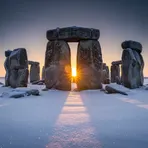 8
4.8
8
4.8
The day in December with the shortest daylight and longest night in the northern hemisphere
Surface Forms
Morphology
The phrase is a straightforward noun–noun composition: 'summer' specifies which 'solstice' is meant, so a learner who knows both words can infer it denotes the solstice that occurs in summer (the longest day). This compositional pattern is common across languages (e.g. Spanish 'solsticio de verano') and follows regular English modifier+head structure, making it transparent to B1 learners.
Etymology
The term summer solstice comes from people long ago watching the sun. One popular idea says the word solstice comes from the sun seeming to 'stand still' at its highest point, which makes the 'longest day' of the year and explains why people held festivals to mark it.