

midsummer
 10
3.7
10
3.7

- noun
- /ˈmɪdˌsʌmər/
- Across the street, Bride Lake sparkles under the midsummer sun, and a cool breeze breaks through the thick air.
Loading YouTube…
Watch on YouTubeThe spring pollen onslaught dwindles by Midsummer, just in time for ragweed season.
- The spring pollen onslaught dwindles by Midsummer, just in time for ragweed season.
- So we'll have all those pieces in place by Midsummer.
- By Midsummer, they should start to push some some flower spikes.
- But if you come to Midsummer night to Helsinki, you'll think that it's it's it's empty.
- It can be used in Midsummer to, to even grow some of your, your lettuces and things like that.
Examples
-
Bonfires as part of midsummer festivals were also popular among the northern Russians in pre-Soviet times.
Academic text (2000) -
Every midsummer we have this dance competition, and the winner gets crowned.
-
The midsummer of '52 was when everything changed.
-
It was a beautiful midsummer day in early July.
-
Not a cloud spoils the cool midsummer sky as the opening ceremonies begin.
Fiction book (1995) -
At the end of June, Ravensfield Valley was shimmering green under the midsummer sun.
Fiction book (1993) -
The spring pollen onslaught dwindles by Midsummer, just in time for ragweed season.
-
Every year, we host a picnic to celebrate midsummer with friends and family.
-
The town prepares for the midsummer festival by decorating the streets with flowers.
-
On the longest day of the year, people gather to watch the sunset and celebrate midsummer.
Synonyms
 5
4.2
5
4.2
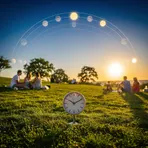
A day with the most daylight in the year, usually around June 21 in the north
Compounds


 1
6.8
1
6.8
A night around the longest day of the year when people celebrate with fires and dancing

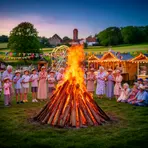
A traditional day around June 24 marking the middle of summer, often celebrated with bonfires and fairs
Surface Forms
Morphology
Etymology
Midsummer is simply mid + summer, meaning the 'middle of summer' and the time around June 21, the 'longest day' of the year in the northern half of the world. Many places, especially in northern Europe, celebrate midsummer with festivals and bonfires, which helps explain why it is still a special time today.