
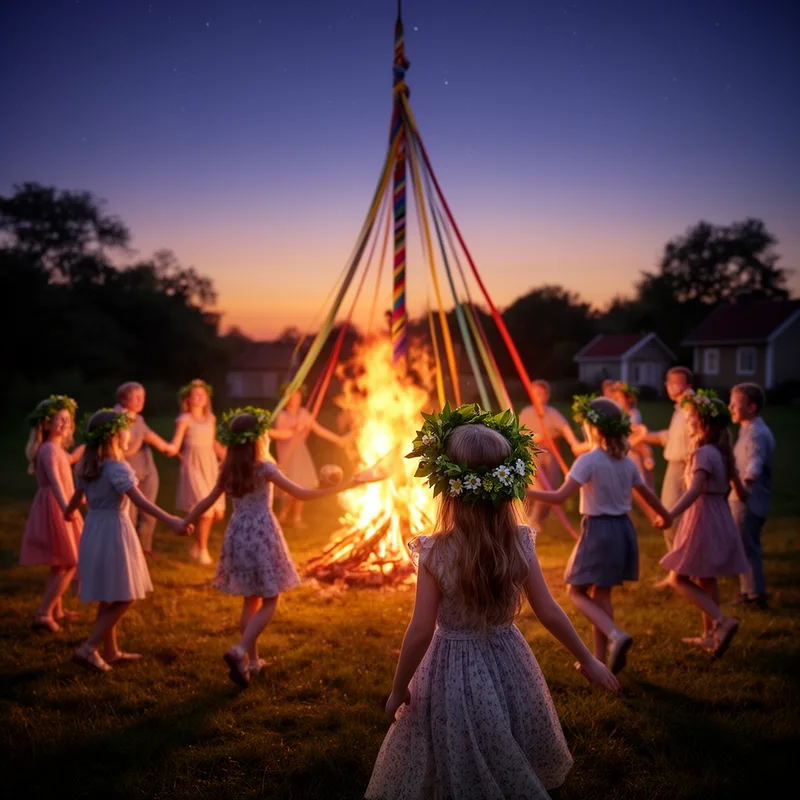
Midsummer Eve


 1
8.4
1
8.4
- noun
- During Midsummer Eve, many people gather to enjoy music and dancing in the streets.
Examples
-
We celebrated with a bonfire on Midsummer Eve to honor the ancient traditions.
-
Is it some kind of witches' broth you ladies are cooking on Midsummer Eve, huh?
-
In some cultures, Midsummer Eve is marked by light festivals and community feasts.
Synonyms
 1
6.8
1
6.8
A night around the longest day of the year when people celebrate with fires and dancing

The evening before Midsummer Day when people light bonfires and celebrate

The night before Midsummer Day that people in some countries celebrate with bonfires and songs

The night before Midsummer Day when people in some countries celebrate with bonfires and festivals
Surface Forms
Morphology
The sense 'the evening before Midsummer Day' is directly and compositionally derived from 'midsummer' (the longest day / the festival day) plus 'eve' (the time immediately preceding an event). This calendar-label pattern (X Eve) is common and transparent in English and in many other languages, so a B1 learner who knows the constituents will readily infer the meaning.
Etymology
Midsummer Eve comes from old summer festivals. The word Eve means 'the night before' and Midsummer points to the middle of summer when people stayed up, lit bonfires and watched for signs of magic, so the phrase now means the evening before Midsummer Day when people celebrate and expect festive or strange events.