
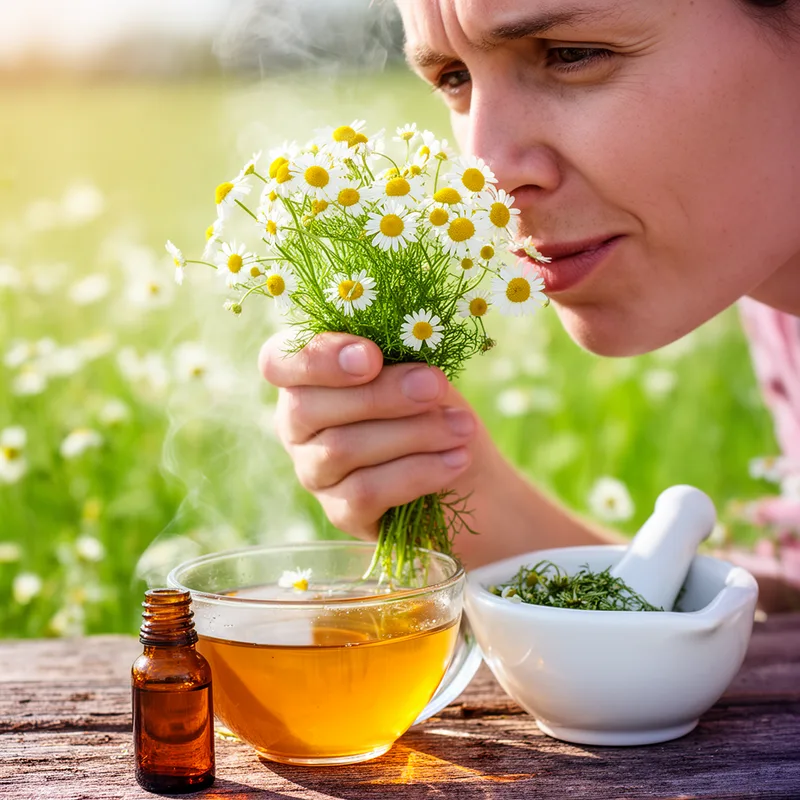
wild chamomile
- noun
- /waɪld ˈkæməˌmaɪl/
- UK
- Many people use wild chamomile in teas, though its flavor is notably more bitter than true chamomile.
Examples
-
Although wild chamomile is similar medicinally, some herbalists prefer the traditional variety for its milder taste.
-
We found wild chamomile growing along the field, its scent filling the summer air.
-
I found some wild chamomile growing in the garden.
-
The wild chamomile smells similar to regular chamomile.
-
Many people use wild chamomile in teas, though its flavor is notably more bitter than true chamomile.
-
Although wild chamomile resembles traditional chamomile, its taste is distinctly more bitter and less favored.
-
Herbalists often recommend wild chamomile for its unique fragrance, despite its less effective medicinal properties.
Synonyms

A small flowering herb used to make a calming tea and essential oil, with a slightly bitter taste
A European herb with small white flowers used to make calming tea

A small annual herb like chamomile with fragrant flowers used in tea to help relax

A plant like chamomile that grows for one year, tastes more bitter, and helps mild stomach problems
Surface Forms
Morphology
The meaning is directly compositional: 'wild' (growing naturally) modifies 'chamomile' (the herb), so a B1 learner who knows both words can infer it denotes chamomile growing in the wild. This adjective+noun pattern is a regular, cross-linguistically common construction, making the sense immediately understandable from the constituents.
Etymology
Wild chamomile The name wild chamomile may come from a wild version of garden chamomile that grows in fields and is not looked after by gardeners. That's why it means a chamomile-like herb that tastes more 'bitter' and is seen as 'less effective' than the true garden chamomile.

