

sweet false chamomile
- noun
- UK
- Although sweet false chamomile resembles true chamomile, its taste is noticeably more bitter.
Examples
-
Many herbalists use sweet false chamomile as a mild remedy for digestive issues.
-
Farmers can find sweet false chamomile growing wild along the edges of their fields.
-
The sweet false chamomile is often mistaken for true chamomile.
-
Many herbalists use sweet false chamomile in their remedies.
-
Herbalists often recommend sweet false chamomile for a milder flavor compared to true chamomile.
-
In the garden, sweet false chamomile can thrive alongside various other herbs.
-
Due to its bitterness, sweet false chamomile is less popular than its true counterpart for tea.
Synonyms
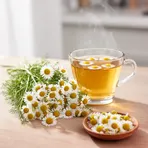
A European herb with small white flowers used to make calming tea

A small annual herb like chamomile with fragrant flowers used in tea to help relax

A small flowering herb used to make a calming tea and essential oil, with a slightly bitter taste

A small annual herb with a strong smell and bitter taste used in teas and medicine
Surface Forms
Morphology
The phrase is compositionally analyzable: 'chamomile' names the plant, 'false' signals an imitation or look‑alike, and 'sweet' describes its scent or taste, so together they denote a chamomile‑like plant with a sweet scent that is not true chamomile. This follows regular modifier + noun patterns and is cross‑linguistically common, so a B1 learner who knows the constituents can infer the meaning.
Etymology
Sweet false chamomile comes from a simple picture: the herb often smells a little sweet and looks like chamomile, but it is a 'false' lookalike with a more bitter taste. So the name tells you it is similar to chamomile but 'not true chamomile' and is seen as less effective.

