

white false indigo
- noun
- US
- She planted white false indigo along the fence to create a natural border with summer interest.
Examples
-
The garden's centerpiece was a blooming white false indigo that attracted many bees.
-
Botanists in the region frequently encounter white false indigo in open meadows and woods.
-
The white false indigo blooms beautifully in the spring.
-
Many gardeners love white false indigo for its creamy flowers.
-
In late spring, the garden was vibrant with the creamy white flowers of white false indigo.
-
I often see white false indigo thriving in the wildflower patches along the hiking trails.
-
Many gardeners appreciate white false indigo for its ability to attract pollinators and enhance their landscapes.
Synonyms
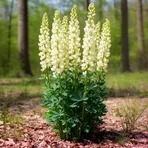
A wild plant with upright stems and creamy white flowers native to the eastern United States

A North American plant with blue, white, or yellow flowers that grows in prairies and open woods
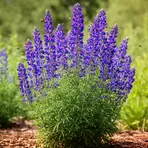
A North American shrub with blue or purple flowers often grown in gardens
Surface Forms
Morphology
The phrase is compositional: 'false indigo' can be understood as an indigo-like plant that is not true indigo (ʼfalseʼ signaling imitation or resemblance), and 'white' simply specifies the flower/plant color. This follows ordinary adjective + noun naming patterns for plants, so a B1 learner who knows the constituents can reasonably infer it refers to a white-flowered plant related to indigo.
Etymology
White false indigo may come from how the plant looks: white describes its pale flowers, and false indigo means it looks like the real indigo plant but is 'not the true dye plant'. So the name points to a plant that resembles indigo but is actually a different plant.

