
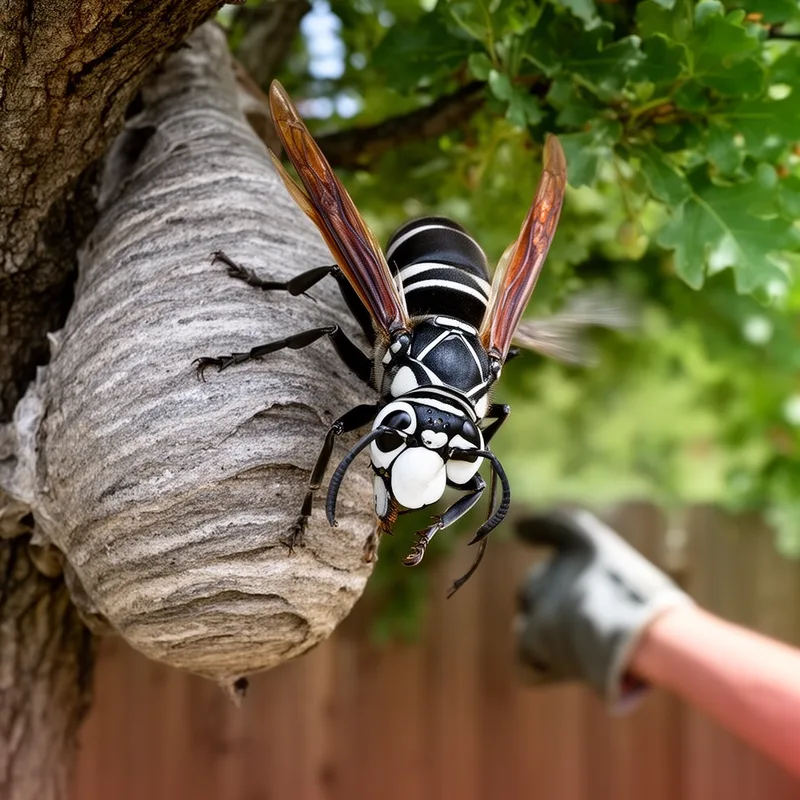
white-faced hornet
- noun
- /ˈwaɪt feɪst ˈhɔrnɪt/
- US
- Gardeners should take care when approaching a white-faced hornet nest during the summer months.
Examples
-
The painful sting of a white-faced hornet can cause severe reactions in some people.
-
The white-faced hornet is known for its aggressive nature.
-
A white-faced hornet nest was discovered in the old oak tree behind the house.
-
Have you ever seen a white-faced hornet up close?
-
A white-faced hornet nest was discovered in the old oak tree behind the house.
-
Gardeners should take care when approaching a white-faced hornet nest during the summer months.
-
The painful sting of a white-faced hornet can cause severe reactions in some people.
Synonyms
A large black and white wasp often called the bald-faced hornet that makes big paper nests

A large black and white hornet in North America that builds paper nests in trees and defends them
Surface Forms
Morphology
white-faced + hornet
This is a straightforward descriptive compound: 'white-faced' (having a white or pale face) combined with 'hornet' (a large wasp) yields a hornet with a pale/white face. The meaning is directly compositional and follows common adjective+noun patterns found across languages, so a B1 learner who knows the constituents can infer the meaning.
Etymology
The name white-faced hornet comes from the insect's pale face that stands out on its dark body, so people called it white-faced. That's why the name refers to 'a large black-and-white hornet from North America that can be aggressive and sting'.

