
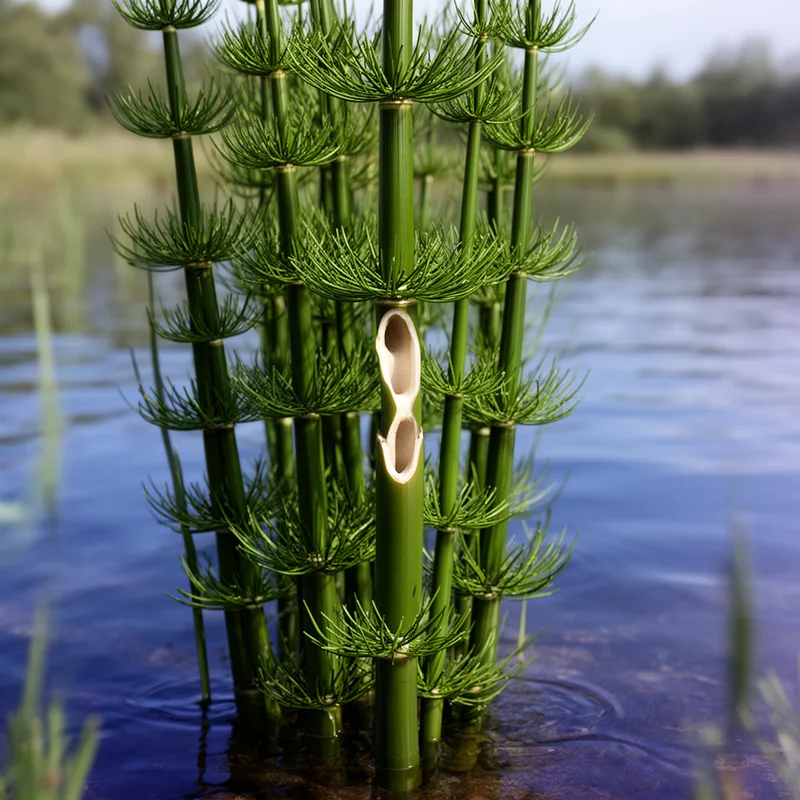
water horsetail
- noun
- /ˈwɔːtər ˈhɔːrsteɪl/
- UK
- Botanists studying wetland ecology often encounter water horsetail in their fieldwork.
Examples
-
The dense stands of water horsetail provide shelter for aquatic wildlife.
-
Water horsetail grows abundantly along the edges of northern lakes and ponds.
-
Look at the water horsetail!
-
The water horsetail thrives in wetland areas.
-
Water horsetail grows abundantly along the edges of northern lakes and ponds.
-
The dense stands of water horsetail provide shelter for aquatic wildlife.
-
Botanists studying wetland ecology often encounter water horsetail in their fieldwork.
Synonyms

 1
8.1
1
8.1

A plant with hollow, jointed stems that spreads like a weed
A green plant with hollow stems made of sections that grows in ponds and marshes
A tall green plant with hollow stems that grows in marshes

A plant with hollow, jointed stems that makes spores instead of flowers
Surface Forms
Morphology
The noun is a straightforward compound: 'water' + 'horsetail' denotes a horsetail plant associated with water or wetlands, so the overall meaning (an aquatic or water-dwelling horsetail) is directly inferable from the parts. This type of descriptive compounding is common in English and cross-linguistically, so a B1 learner who knows both constituents would readily understand the MWE.
Etymology
Water horsetail comes from the plant's look and where it grows. Its tall stem with rings of thin branches looks like a horse's tail, which explains horsetail, and it usually grows in or beside water, so the name tells you its 'shape' and its 'home'.