

war dance
 1
8.2
1
8.2

- noun
- /wɔr dæns/
- During the festival, they showcased their traditional war dance to celebrate their victory.
Examples
-
The tribe gathered to perform a ceremonial war dance to honor their ancestors before the battle.
-
The proclaimed climax of the event consists of the Ekoi war dance, which is performed by two or sometimes three specially selected men.
Academic text (2008) -
How do I know if this war dance of yours is authentic?
-
Next, he teaches them the war dance.
Academic text (2008) -
It's natives doing a war dance.
-
The two war dance scenes are strikingly similar.
Academic text (2008) -
Jim has jumped up now, dancing an Indian war dance around the mic.
Fiction book (1991) -
6) The president, in traditional clothes and carrying a sword, dances a traditional war dance (al ardha) with his nationals.
Academic text (2000) -
For instance, Kiowa agents helped suppress religious dances like the Sun Dance and Ghost Dance, although war dances were permitted at Wild West shows and Indian fairs.
Academic text (1994) -
The war dance included colorful costumes and rhythmic drumming, captivating the entire audience.
Synonyms
 947
1.0
947
1.0
A set of steps and movements performed to music
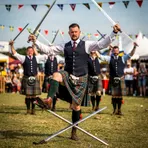 1
6.1
1
6.1
A traditional dance where men step over or wave swords during celebrations
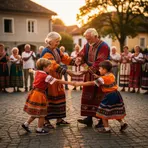 1
2.8
1
2.8
A dance from a community that people learn from their grandparents
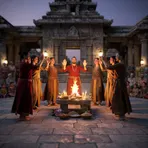 1
5.8
1
5.8
A dance performed during a religious or traditional ceremony


 1
8.8
1
8.8
A special dance held in summer by some Native American tribes to honor the sun
 1
4.2
1
4.2
A dance done during a religious or ritual ceremony to show respect
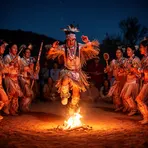
A dance by Apache people performed during a religious ceremony
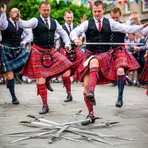
A dance where people step over and move swords in careful steps
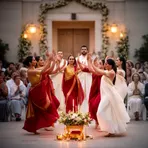
A dance done during religious or ceremonial events like weddings and funerals
Surface Forms
Morphology
The meaning 'a ceremonial dance performed in relation to war or battle' is directly and compositionally derived from combining 'war' (armed conflict) with 'dance' (a choreographed movement). This noun compound follows a common, cross-linguistic pattern of modifier + head, so a B1 learner who knows both words can readily infer the basic meaning (though specific cultural connotations may require extra knowledge).
Etymology
War dance comes from real dances that warriors did before going into battle or after a victory. In the phrase, war is the fighting part and dance is the dancing with stomping, shouting, and showing weapons to make themselves brave and frighten the enemy. So, war dance now means a special dance done 'before battle' or to 'celebrate victory'.