

to volatilize


 1
9.6
1
9.6
- verb
- /ˈvɒlətəˌlaɪz/
- Specialized
- In the lab, scientists observed that the solvent would volatilize rapidly under high temperatures.
Examples
-
The heat is produced around the time when the flowers open, and it helps volatilize their aroma, which attracts flesh flies seeking a warm spot to lay eggs.
Academic text (2010) -
Plywood and particle board can contain glues and binders that volatilize into toxic substances as they decompose.
Academic text (1995) -
These additional water treatments, added to the condensate holding tank, are not meant to volatilize into the steam.
Academic text (1993) -
During heating, the vapor pressure of oil increases, and the oils are volatilized into vapors.
Academic text (2004) -
Intensive fertilization can increase the rates at which nitrogen in the form of ammonia is volatilized and lost to the air.
Academic text (2000) -
Recycling occurs when mercury in water volatilizes and contributes to the buildup of atmospheric mercury concentrations.
Academic text (2002) -
Volatilizing amines should only be used in systems with well-maintained automatic dosing devices.
Academic text (1993) -
Heavy metals such as zinc, lead, cadmium, mercury, and arsenic volatilize in elemental form, although mercury is often present as mercury chloride.
Academic text (1993) -
If the pile gets too dry or the pH goes too high, the gaseous ammonia forms and is lost from the pile as it evaporates (i.e., volatilizes).
Academic text (1999) -
When heated, the chemical compound will volatilize, transforming from a liquid to a vapor.
Synonyms
 45
3.5
45
3.5
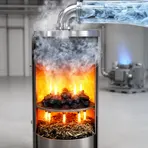
Change a liquid like water into gas by heating
 17
5.3
17
5.3
To change from a liquid into gas, usually by heating
 1
7.0
1
7.0
To change something into gas by heating it or by a chemical reaction

To change from a liquid into a gas and disappear
Antonyms

How Vaporized

Surface Forms
Morphology
Etymology
Volatilize comes from the root volat-, from Latin volare, which means 'to fly', and you can see the same root in the word volatile, plus the ending -ize, which means 'to make'. So, to volatilize is to make something 'fly' into the air, that is, to turn it into a vapor.