
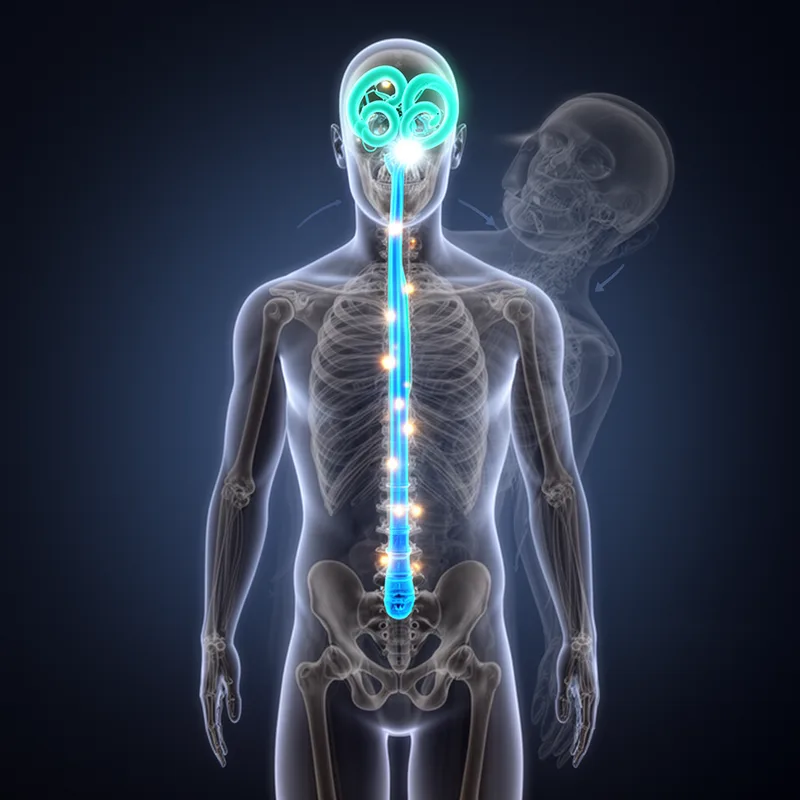
vestibulospinal
- noun
- /ˌvɛstɪbjuˈloʊspaɪnəl/
- Specialized
- The vestibulospinal tract plays a crucial role in maintaining upright posture.
Examples
-
Researchers studied how the vestibulospinal system responds to sudden changes in head position.
-
Damage to the vestibulospinal pathway can result in difficulties with balance and coordination.
-
The vestibulospinal tract plays a crucial role in maintaining balance.
-
Research on vestibulospinal pathways has advanced significantly.
-
The vestibulospinal tract transmits important signals that help maintain balance during movement.
-
Injuries that affect the vestibulospinal tract can severely impair a person's ability to stand upright.
-
The role of the vestibulospinal pathway in posture control is essential for athletes during physical activities.
Surface Forms
Morphology
Etymology
Vestibulospinal comes from vestibulo- (from Latin vestibulum, 'entrance', as in the word vestibule) and spinal (from spine, 'back'). This helps you remember the vestibulospinal tract as the nerve path from the ear's balance 'entrance' to the spine, which is why it carries signals for posture and balance.

