

vesiculation
- noun
- /ˌvɛsɪˈkjʊleɪʃən/
- Specialized
- The patient exhibited significant vesiculation after exposure to the allergen.
Examples
-
Early vesiculation may indicate a bullous skin disorder.
-
Doctors noted vesiculation around the injection site during examination.
-
Is there vesiculation present?
-
The doctor explained the process of vesiculation during the consultation.
-
Doctors noted significant vesiculation around the injection site during examination.
-
The patient exhibited vesiculation after contact with the irritant.
-
Early signs of vesiculation were observed, suggesting a skin reaction.
Synonyms
 2
6.1
2
6.1

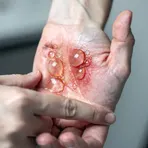
The skin making painful raised areas filled with liquid

The formation of blisters on the skin often from disease or chemicals
Surface Forms
Morphology
vesiculation = vesiculate (opaque) = vesicul + ation
The noun is formed from the specialized verb 'vesiculate' with '-ation', but the medical meaning is not readily inferable for an average learner.
Etymology
Vesiculation comes from the Latin vesica, meaning 'bladder' or 'blister', and is the same root as vesicle, a word for a 'small sac'. So vesiculation is the process of forming little fluid-filled blisters or sacs under the skin.