
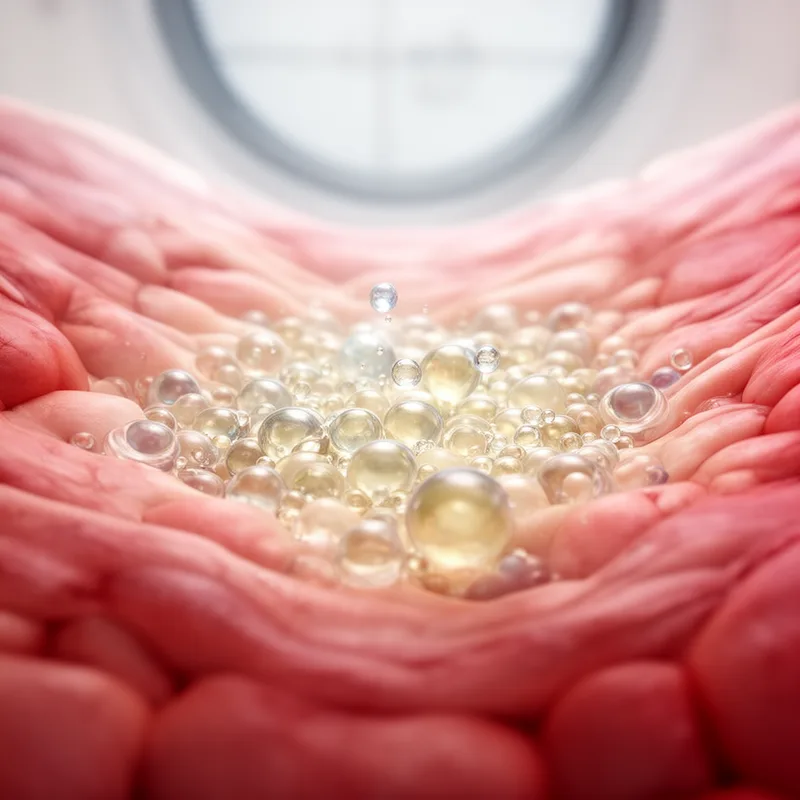
to vesiculate
- verb
- /vɛˈsɪkjʊˌleɪt/
- Specialized
- The researchers observed that heating could vesiculate the mineral samples, forming numerous air pockets.
Examples
-
The treatment can vesiculate the tissue, creating small fluid-filled spaces.
-
Certain bacteria may vesiculate cell membranes during infection.
-
The heat can vesiculate the material.
-
The process will vesiculate the liquid.
-
Heating the rubber can vesiculate it, resulting in small air pockets forming within.
-
The chemical reaction will vesiculate the mixture, causing tiny bubbles to develop.
-
When the foam is exposed to heat, it starts to vesiculate and expand as air cells form.
Synonyms


 1
8.8
1
8.8
To make bubbles in a liquid when pressure drops suddenly
To make blisters appear on the skin
Surface Forms
Morphology
Etymology
Vesiculate comes from the Latin vesica, meaning 'bladder' or 'blister', and is the same root as vesicle. That's why to vesiculate is to form tiny 'blisters' or 'bubbles', making small cavities or fluid-filled spaces.