
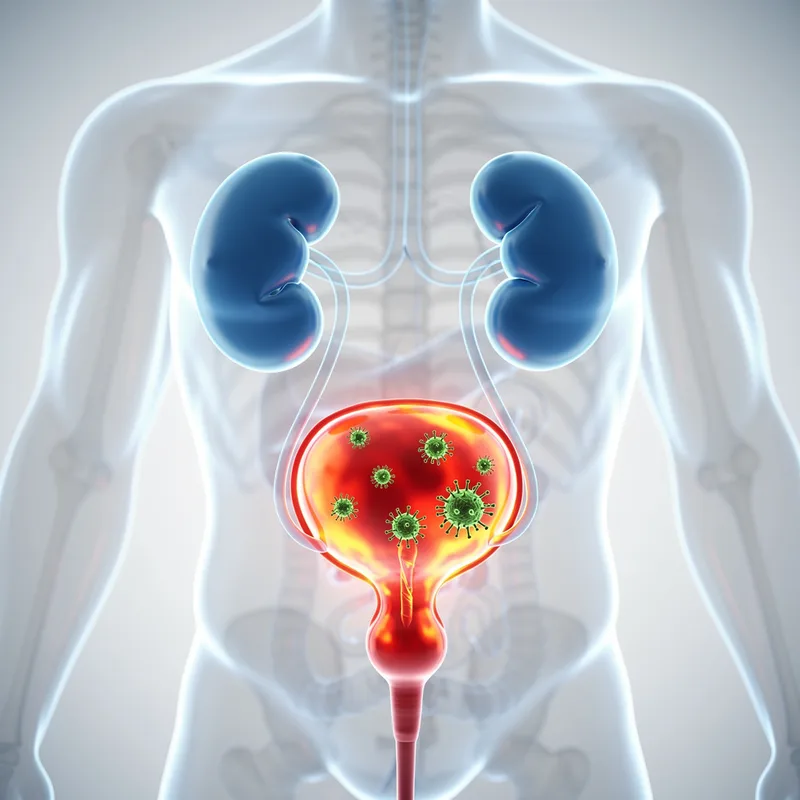
urinary tract infection
 8
3.7
8
3.7

- noun
- /ˈjʊrɪˌnɛri trækts ɪnˈfɛkʃən/
- Specialized
- Urinalysis can identify the presence of a urinary tract infection, which may be the cause of symptoms.
Loading YouTube…
Watch on YouTubeIt can be anything from a urinary tract infection to a bad tooth, to an Abscess somewhere to some upset in their belly, anything.
- It can be anything from a urinary tract infection to a bad tooth, to an Abscess somewhere to some upset in their belly, anything.
- And I wanted to highlight the E coli because just remember, E coli is the most common cause of urinary tract infections in we women.
Examples
-
THE CASE: A 74-year-old lady telephoned triage complaining of symptoms of a urinary tract infection and requested a same-day appointment.
Academic text (2011) -
Four of the patients with pneumonia also had wound infections, and two had urinary tract infections.
Academic text (1999) -
And I'll just say that I have a urinary-tract infection.
-
So Sophie's got a urinary-tract infection.
-
It's a urinary tract infection.
-
Do you know what the majority of American women choose to treat urinary tract infections?
Blog text (24) -
About 50 percent of all women experience at least one urinary tract infection in their lifetime.
Blog text (24) -
Women who change sexual partners may experience bladder or urinary tract infections more often.
Blog text (24) -
Potassium citrate makes the urine alkaline and relieves the discomfort of cystitis in lower urinary tract infections.
Academic text (2011) -
The doctor diagnosed me with a urinary tract infection after I reported my symptoms.
Synonyms
 5
3.7
5
3.7
An infection in the parts that make or carry urine, like the bladder
How Severe
- Specialized

 1
9.9
1
9.9

- Specialized
1
9.9
- Specialized
8
3.7
- Specialized
Surface Forms
Morphology
Each constituent contributes transparently: 'urinary' (related to urine), 'tract' (a bodily passage or system), and 'infection' (illness caused by pathogens) combine straightforwardly to mean an infection located in the urinary tract. This standard compositional noun phrase pattern is common cross-linguistically, so a B1 learner who knows the component words can reliably infer the MWE's meaning.
Etymology
The medical term urinary tract infection is a simple, direct name: urinary means about 'urine', tract means the 'path' urine follows, and infection means when 'germs' grow. So it means germs in the parts that carry or store urine, like the bladder or kidneys.