

pyelonephritis
 1
9.9
1
9.9

- noun
- /ˌpaɪəloʊnəˈfraɪtɪs/
- Specialized
- Pyelonephritis in the first years of life may lead to hypertension or chronic renal failure in later childhood or adulthood.
- renal pyelonephritis
Examples
-
This decrease was attributed to further scarring of the renal parenchyma from recurrent pyelonephritis, which occurred despite antibiotics.
Academic text (2000) -
Periodic reviews to age 24 years showed no further pyelonephritis; she had normal blood pressure on antihypertensives, and her renal function was stable.
Academic text (2000) -
Mrs. Brown had no back or loin pain and was apyrexial; therefore, it did not indicate an upper UTI such as pyelonephritis.
Academic text (2011) -
Similarly, Chen et al. studied 21 cases of urologic cancer and found that one of the risk factors was chronic tuberculous pyelonephritis.
Academic text (2006) -
Vesicoureteric reflux is associated with pyelonephritis, renal scarring, hypertension, and renal failure, and these associations may be prevented by medical treatment.
Academic text (2000) -
The most common (<1%) serious infections reported with abatacept were pneumonia, cellulitis, urinary tract infection, bronchitis, diverticulitis, and acute pyelonephritis.
Academic text (2007) -
The doctor confirmed that his condition was acute pyelonephritis, resulting from a urinary tract infection.
-
Patients with pyelonephritis often experience fever, chills, and pain in their lower back.
-
She was treated for pyelonephritis after experiencing persistent abdominal pain and frequent urination.
Synonyms

A sudden severe kidney infection that happens when bacteria move up from the bladder
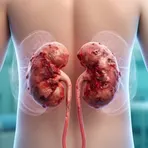
A long-lasting kidney infection that can cause serious kidney damage
Compounds
- Specialized
A long-lasting kidney infection that can cause serious kidney damage
- Specialized
A sudden severe kidney infection that happens when bacteria move up from the bladder
How Severe
- Specialized
14
7.0

- Specialized
1
9.9
- Specialized
8
3.7
- Specialized
2
6.7
Surface Forms
Morphology
pyelonephritis = nephritis (opaque) = pyelo + nephr + itis
The combination uses specialized medical combining forms ('pyelo-' and 'nephr-/-itis') that are not familiar to an average B1 learner, so the meaning cannot be derived from common English base words.
Etymology
Pyelonephritis breaks into three parts: pyelo- from a Greek word meaning 'basin', nephr- meaning 'kidney', and -itis meaning 'inflammation'. So, pyelonephritis means the 'inflammation' or infection of the kidney and its basin where urine collects, which fits the medical meaning.