
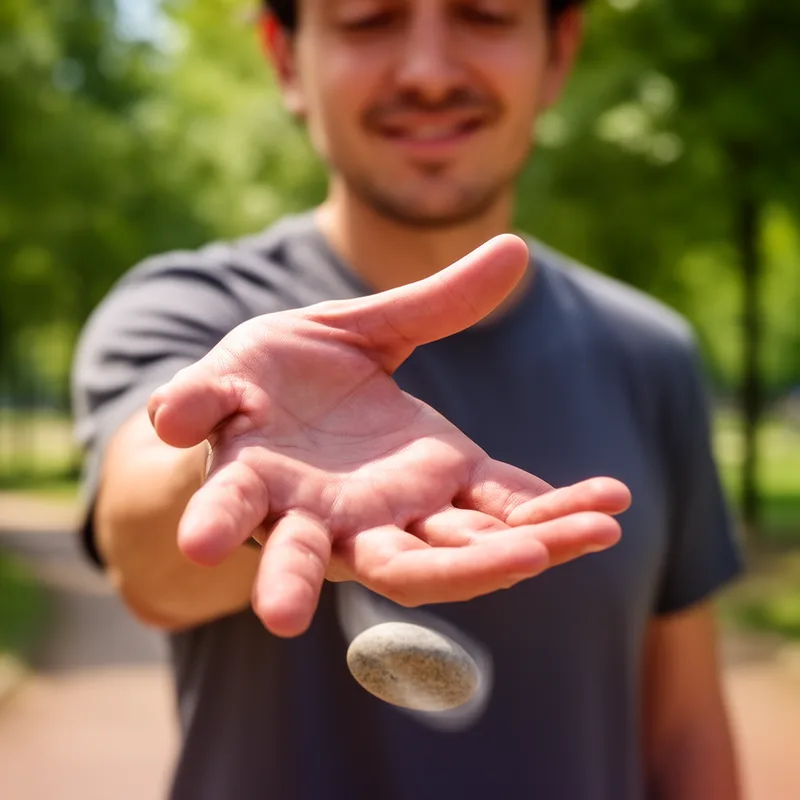
to unloose grip
- phrasal verb
- She decided to unloose grip on old resentments and move forward with her life.
Examples
-
If you unloose grip on the steering wheel, the car may veer off course.
-
To pick up the ball, he had to unloose grip on the bat first.
-
He tried to unloose grip, but the handle was slippery from the rain.
-
He decided to unloose grip on the tightly wound rope to ease the tension.
-
When she began to unloose grip on her worries, she felt a sense of relief.
Synonyms

 ∞
1.4
∞
1.4

To stop holding something or someone so they are free
 356
1.9
356
1.9
To stop holding something so it is not in your hand
 57
3.7
57
3.7
To make something less strong or strict
 18
8.6
18
8.6
Let go of someone or something you are holding
 12
3.9
12
3.9
Relax and enjoy yourself without worrying
 9
4.0
9
4.0
To become gradually less strong or severe
 7
4.1
7
4.1
Open a tight hand or jaw to relax it
 3
5.6
3
5.6
To open something held closed by a small metal catch or let go of something you were holding
 1
7.0
1
7.0
To make something less tight or set something free

To make something less tight or free it from something holding it

To let go of something you hold tightly
How Loose
∞
1.4

Surface Forms
Morphology
The meaning is directly and predictably built from 'unloose' (to make less tight or to free) + 'grip' (a hold), so a learner who knows both words can infer 'to relax or release one's hold or control'. Although 'unloose' is somewhat formal/archaic, the verb+noun composition and the metaphorical extension to control are straightforward and cross-linguistically common, making the phrase transparent to a B1 learner.
Etymology
Unloose grip comes from the clear image of hands holding something tight and then opening so the object can fall or move away. The word unloose means to loosen and grip means a hold, so together they mean 'to let go' or 'release control', which is why we use it for letting go of objects or feelings like anger.