
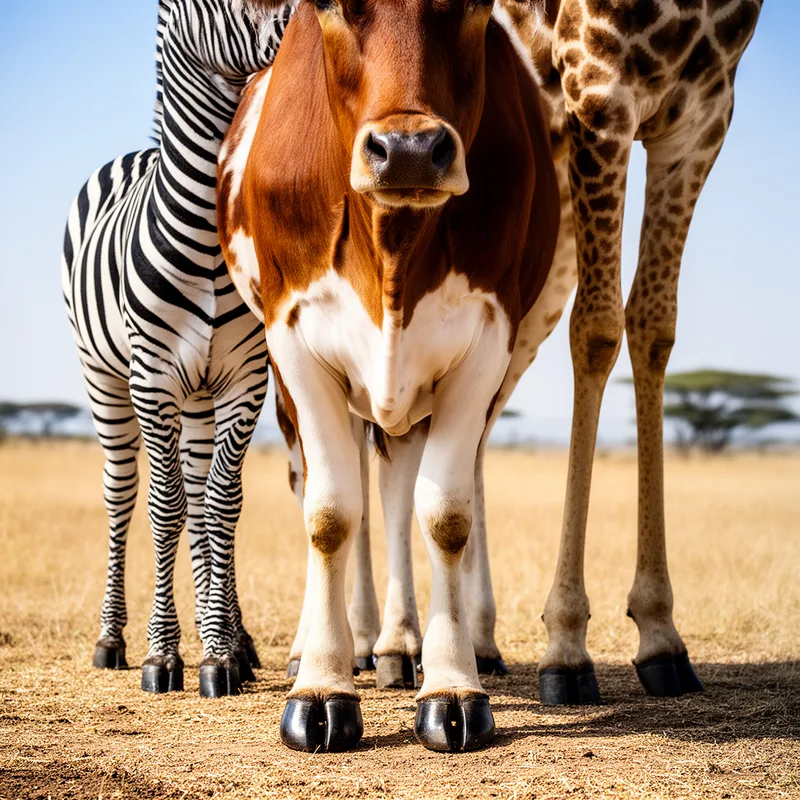
ungulate
 1
8.6
1
8.6

- noun
- /ˈʌŋɡjʊlɪt/
- Specialized
- At the national park, visitors often see different ungulates like deer and elk grazing peacefully in the fields.
- feral ungulates
- large ungulates
- native ungulates
Loading YouTube…
Watch on YouTubeAnd Peter was studying ungulates, so sheep and goats.
- And Peter was studying ungulates, so sheep and goats.
- Sometimes being chased by a ungulate or whatever.
Examples
-
In Hawaii's case, habitat degradation by alien ungulates was—and still is—the crowning blow.
Academic text (2000) -
Spotted hyenas feed mainly on medium- or large-bodied ungulates, which they hunt themselves (Kruuk 1972).
Academic text (1998) -
So it attacks a lot of ungulates, a lot of things that are related to cattle and sheep.
-
The demonstration site is protected from ungulates by a fence.
Academic text (2000) -
"Removing ungulates is a necessary and critical first step, but it is not sufficient in itself," Cabin said.
Academic text (2000) -
The fact seems to be that wolves prefer to prey on wild rather than domestic ungulates.
Fiction book (1998) -
While cattle are its primary victims, the disease can affect buffaloes and other even-toed ungulates.
Academic text (2013) -
The water source in an otherwise arid place attracts ungulates, which fall prey to the leopards.
Academic text (2011) -
Habitat destruction by introduced ungulates may well have contributed to the extirpation of the island scrub-jay from Santa Rosa Island.
Academic text (2011) -
The Talek region is characterized by open grassland that is grazed year-round by large concentrations of ungulates.
Academic text (1998)
Synonyms


 1
9.9
1
9.9
A group of animals with hooves once put together but now divided into two groups

A mammal that has hooves like a horse or deer
Compounds
- Specialized
A mammal with hooves that walks on an even number of toes, like cows or deer

- Specialized
An animal with hooves and an odd number of toes, like horses or rhinos
Surface Forms
Etymology
Ungulate comes from the Latin words ungula and unguis, which mean 'nail' or 'hoof'. Think of a hoof as a big 'nail' — that's why ungulate names animals like horses, cows, and deer that have hooves.