

even-toed ungulate
- noun
- /ˈiːvən toʊd ˈʌŋɡjʊlɪt/
- Specialized
- The zoo has an exhibit featuring even-toed ungulates like deer and goats, which attract many visitors.
Examples
-
While cattle are its primary victims, the disease can affect buffaloes and other even-toed ungulates.
Academic text (2013) -
Cattle, pigs, and deer are all examples of even-toed ungulates that thrive in various habitats.
-
Hooves in an archaic whale are not surprising, as the closest living relatives of cetaceans are even-toed ungulates such as pigs and deer.
Academic text (2001) -
Farmers often raise even-toed ungulates for their meat, milk, and other products.
Synonyms
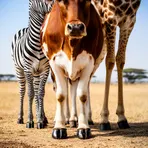
 1
8.6
1
8.6

A mammal with hooves like a horse or cow


 1
9.9
1
9.9
A hoofed animal with an even number of toes, like a cow or sheep
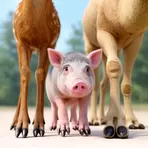
A mammal with hooves and an even number of toes, like deer, pigs or camels
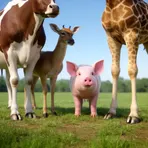
Animals like cows, deer, and pigs that have hooves and an even number of toes

A mammal that has hooves like a horse or deer
Antonyms

- Specialized
An animal with hooves and an odd number of toes, like horses or rhinos
Surface Forms
Morphology
even-toed + ungulate
The phrase is a straightforward compound: 'even-toed' (having an even number of toes) combined with 'ungulate' (a hoofed mammal) yields the literal meaning 'a hoofed mammal with an even number of functional toes.' This is regular compositional morphology and follows predictable English compounding, so a B1 learner who knows the constituent meanings should be able to derive the MWE meaning.
Etymology
The name even-toed ungulate comes from a simple image: even-toed means the animal has an even number of toes on each foot and ungulate means a 'hoofed' animal. So, the phrase describes animals like pigs, cows, and deer that walk on an even number of toes.