
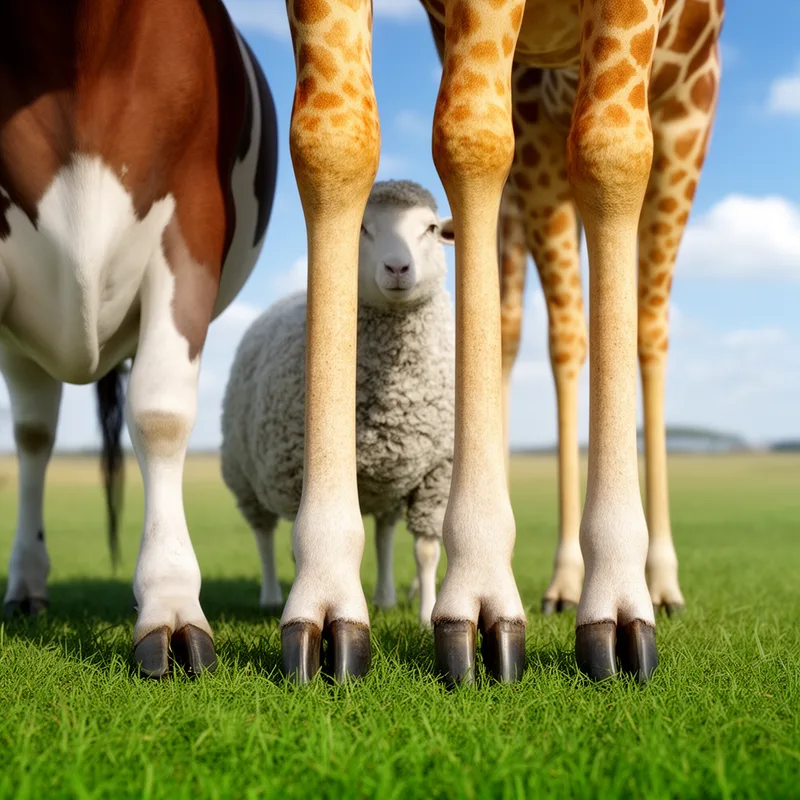
artiodactyl


 1
9.9
1
9.9
- noun
- /ˌɑrtiˈɑdɪktəl/
- Specialized
- Biologists often study artiodactyls to understand their adaptations to different habitats and climates.
Examples
-
Why have artiodactyls evolved these extraordinary structures, many of which are so heavy and unwieldy?
Academic text (2011) -
Artiodactyls are hoofed animals that have an even number of toes, including species like deer and cattle.
-
The museum exhibit featured fossils of various artiodactyls, showcasing their evolutionary traits over millions of years.
Synonyms
A mammal with hooves that walks on an even number of toes, like cows or deer
A mammal with hooves and an even number of toes, like deer, pigs or camels

A mammal that has hooves like a horse or deer
Compounds
- Specialized
A mammal with hooves and an even number of toes, like deer, pigs or camels
Surface Forms
Morphology
Etymology
Artiodactyl comes from Greek parts artios meaning 'even' and dactylos meaning 'finger' or 'toe', so it literally says 'even-toed'. That's why artiodactyl as a noun names hoofed mammals that have an even number of toes on each foot.