
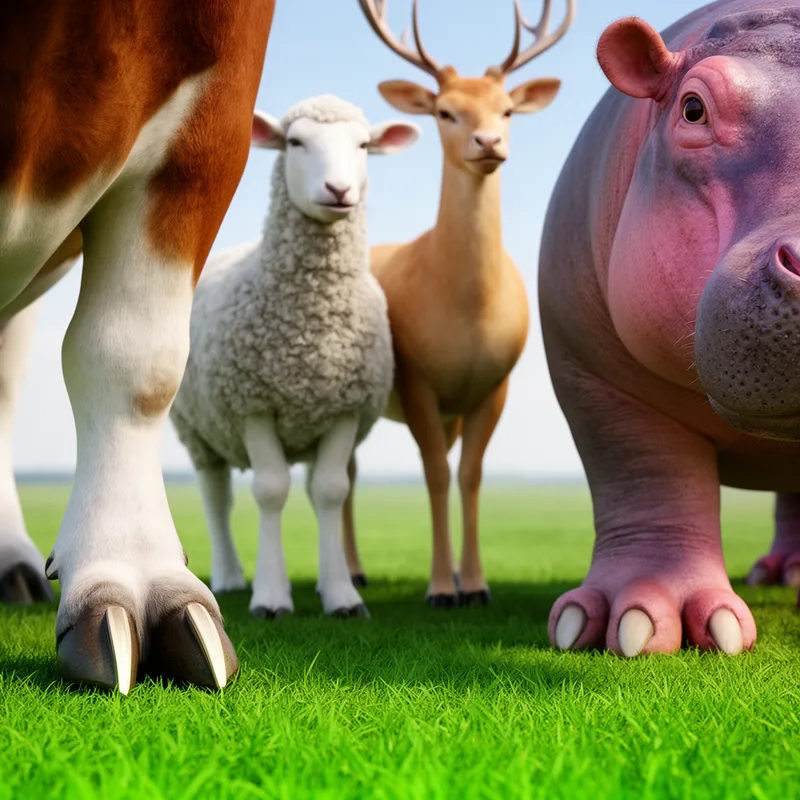
artiodactyl
- adjective
- /ˌɑrtiˈɑdɪktəl/
- Specialized
- A key distinguishing feature of artiodactyl mammals is their even-toed hoof structure.
Examples
-
The artiodactyl lineage includes animals like cows, sheep, and hippos.
-
Some prehistoric artiodactyl species are known only from fossil records.
-
The artiodactyl family includes animals like deer and giraffes.
-
Did you know that the artiodactyl species can be found worldwide?
-
The artiodactyl characteristics of animals like deer and pigs include having an even number of toes on each foot.
-
Scientists classify hippos and camels as artiodactyl mammals due to their unique toe structure.
-
Many artiodactyl species thrive in diverse environments, from forests to grasslands.
Synonyms

A mammal that has an even number of toes on each foot, like a cow or pig
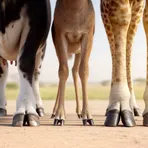
A mammal with an even number of toes on each foot, like a cow or a deer
Compounds
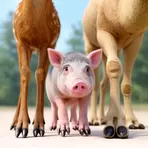
- Specialized
A mammal with hooves and an even number of toes, like deer, pigs or camels
Surface Forms
Morphology
Etymology
Artiodactyl comes from Greek parts artios meaning 'even' and dactylos meaning 'finger' or 'toe', so it literally says 'even-toed'. That's why as an adjective artiodactyl describes animals that have an even number of toes on each foot.

