
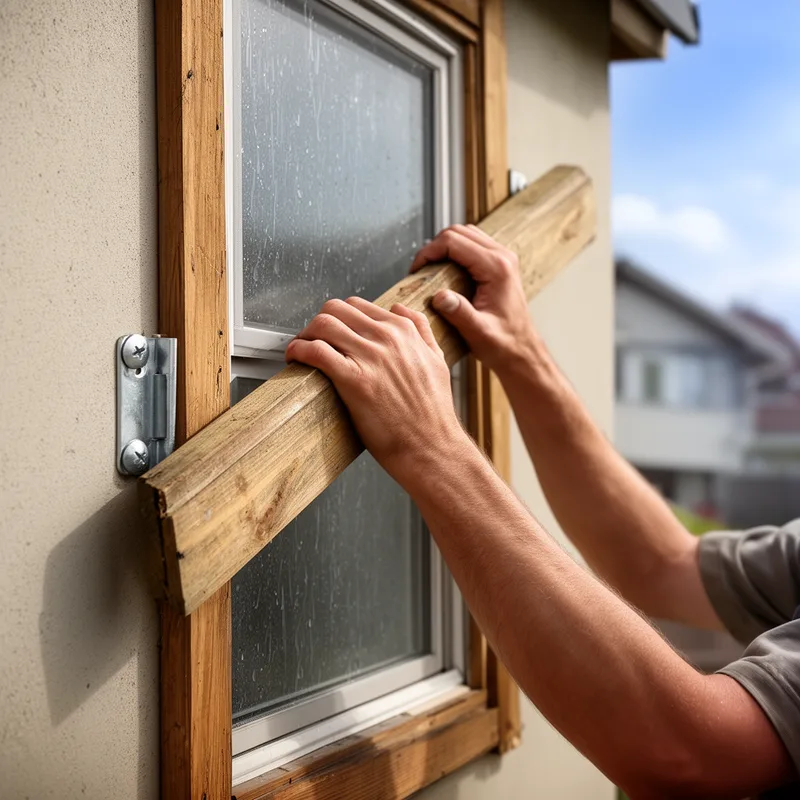
to unbrace

to unbrace

1 8.1
To remove a support that holds something in place
  • verb
  • /ʌnˈbreɪs/
translation icon : desabrochar

Examples

  • I reeled some more and unbraced my legs enough to lean and peep over at the water.

    Fiction book (1995)
  • The workers will unbrace the structure before transporting it to the site.

  • After the storm, they decided to unbrace the old roof to assess the damage.

  • To prepare for the next stage of the project, we need to unbrace the temporary supports.

Synonyms

to untie
vsto unbrace
91 1.0

Make a knot or lace loose by undoing it

is used more for taking away structural supports or braces than untying knots
to unhook
vsto unbrace
35 2.5

To take something off where it hangs, like a coat or necklace

is broader, focusing on removing supports or braces rather than simple hanging catches
to unfasten
vsto unbrace
5 3.4

To open something by undoing a button or zipper

is aimed at removing larger supports or structural securing rather than small closures
to unhitch
vsto unbrace
4 5.7

To take off something that is attached to another thing, like a trailer or bicycle

covers removing supports or bracing used to hold things in place rather than vehicle links
to unstrap
vsto unbrace
4 3.9

To take off a belt or band that holds something in place

is focused more on removing rigid braces or supports rather than only straps
to unbind
vsto unbrace
3 6.4

To free something by untying ropes or cords

refers more to taking away braces or supportive fittings rather than just bindings
to unclasp
vsto unbrace
3 5.6

To open something held closed by a small metal catch or let go of something you were holding

tends to describe removing larger supports or safety fastenings rather than small catches
to unlace
vsto unbrace
3 3.8

To untie strings that close shoes or clothing

is used for taking away structural supports or bracing rather than simple lacing
to unpin
vsto unbrace
1 4.1

To take a pin out so something is no longer attached

covers removing larger securing supports rather than minor pin fastenings
to untether
vsto unbrace
1 6.6

To release something that is tied or fastened so it can move away

applies more to removing structural supports or secured bracing than simple lines
to unattach
vsto unbrace
1 6.1

To separate something from what it is connected to
leans more toward removing rigid supports or braces rather than general separation
to unfix
vsto unbrace
6.8

Take something off a wall or surface

focuses more on removing loadbearing supports or braces than simple detachments
to unlash
vsto unbrace
7.4

Untie rope or straps that hold something in place

has a broader sense for taking away supports or rigid securing, not only lashings
to unpeg
vsto unbrace
6.1

To remove a peg that holds something like a tent

is more about taking away structural bracing or supports than simple pegs
to unbar
vsto unbrace
7.4

To remove a bar or bolt from a door so it can open

is about removing supports or bracing rather than simply lifting a locking bar
to untack
vsto unbrace
8.4

To pull small nails or pins out of something

means removing sturdier supports or secure bracing rather than small fastenings
to undrive
vsto unbrace
9.9

To pull out a nail or stake pushed into something

refers more to removing supports that brace or hold structures rather than driven items

Surface Forms

unbrace infinitive
unbraced past
unbraced past participle
unbracing present participle
unbraces third person singular

Morphology

unbrace = brace (transparent) = un + brace

The meaning is a straightforward reversal/removal formed by the productive prefix 'un-' + the verb 'brace', so learners knowing both should infer the sense.

Etymology

Unbrace comes from the prefix un- meaning 'remove' and brace meaning 'a support' or 'something that holds things steady'. So, to unbrace is to take away a support or let go of a steady hold, which is why it means 'to remove a brace' or 'to release from being braced'.