
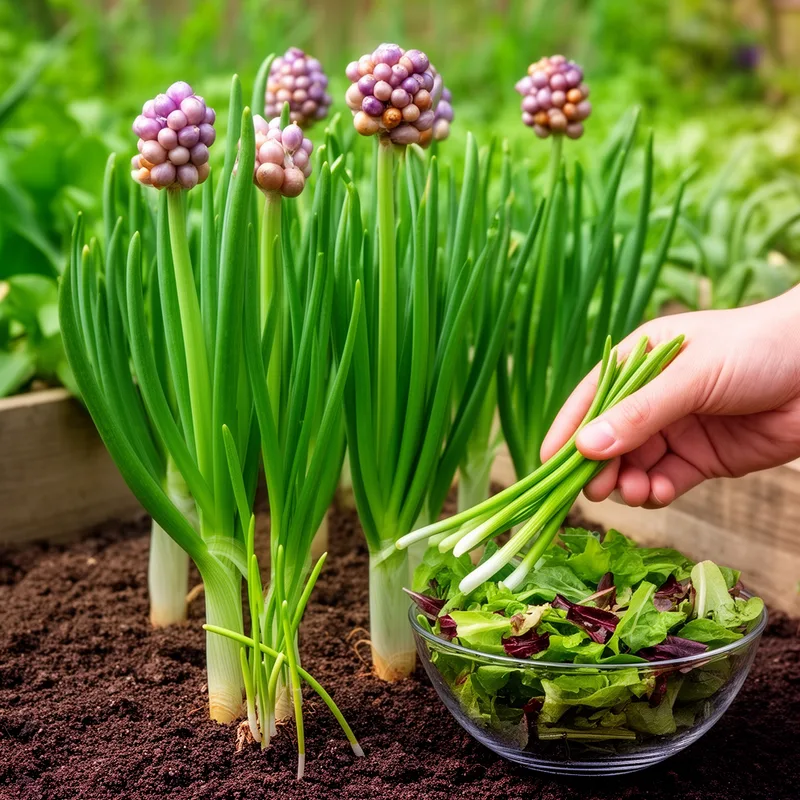
top onion
- noun
- Specialized
- Unlike regular onions, the top onion produces bulbils instead of flowers.
Examples
-
You can use the young shoots of the top onion in salads for a mild flavor.
-
The gardener planted several top onions for their unusual appearance and early harvest.
-
I bought a fresh top onion at the market.
-
The top onions are great for salads.
-
The gardener planted several top onions for their unusual appearance and early harvest.
-
You can use the young shoots of the top onion in salads for a mild flavor.
-
Unlike regular onions, the top onion produces bulbils instead of flowers.
Synonyms
An onion that lives for many years and makes small bulbs on its stalks for salads
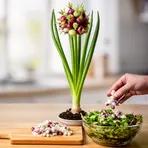
A plant that makes small bulbs on top of its stem used in salads

A kind of onion that makes little bulbs on top of its stem and spreads by them
Surface Forms
Morphology
The compound is directly built from 'top' + 'onion' and denotes a type/variety of onion characterized by a feature at the top of the stem; a learner who knows 'top' and 'onion' will infer it refers to an onion related to its top. Although the precise botanical detail (bulbils replacing flowers) is specialized, the basic meaning 'a kind of onion' is compositionally clear to a B1 learner.
Etymology
Top onion is named for the tiny, onion-like bulbs that grow on the very top of its stem instead of flowers. These little 'tops' look and taste like small onions and can be eaten or planted, so the name explains the plant's unusual look and use.

