

Allium cepa viviparum
- noun
- Specialized
- Unlike regular onions, Allium cepa viviparum produces small bulbs on its stalks instead of flowers.
Examples
-
Unlike regular onions, Allium cepa viviparum produces small bulbs on its stalks rather than seeds.
-
The Allium cepa viviparum can be added to salads for a mild onion flavor.
-
Gardeners sometimes grow Allium cepa viviparum for its unusual clusters of bulbils.
-
I planted Allium cepa viviparum in my garden this spring.
-
Are Allium cepa viviparum easy to grow?
-
Gardeners sometimes grow Allium cepa viviparum for its unusual clusters of bulbils.
-
The Allium cepa viviparum can be added to salads for a mild onion flavor.
Synonyms

A kind of onion that makes little bulbs on top of its stem and spreads by them
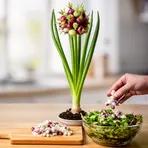
A plant that makes small bulbs on top of its stem used in salads

A plant that makes small bulbs at the top instead of flowers and gives young shoots for salads
Surface Forms
Morphology
Allium + cepa + viviparum
This is a Latin botanical name using specialized taxonomic terms: only 'Allium' may be recognizable as the onion/garlic genus, while 'cepa' and 'viviparum' are Latin elements not in learners' dictionaries here. A B1 learner who only knows ordinary English words would not be able to derive the specific meaning (a viviparous onion producing bulbils) from these constituents, so the expression is not transparently compositional.
Etymology
Allium cepa viviparum comes from Latin words: Allium and cepa mean 'onion', and viviparum means 'live-bearing'. Because this onion makes small baby bulbs on its stalks instead of flowers and seeds, the name gives the picture of an 'onion that gives live bulbs', which is why it refers to this kind of onion today.

