
tonsilla pharyngealis
- noun
- /tɒnˈsɪlə fəˌrɪnˈdʒiːəlɪs/
- Specialized
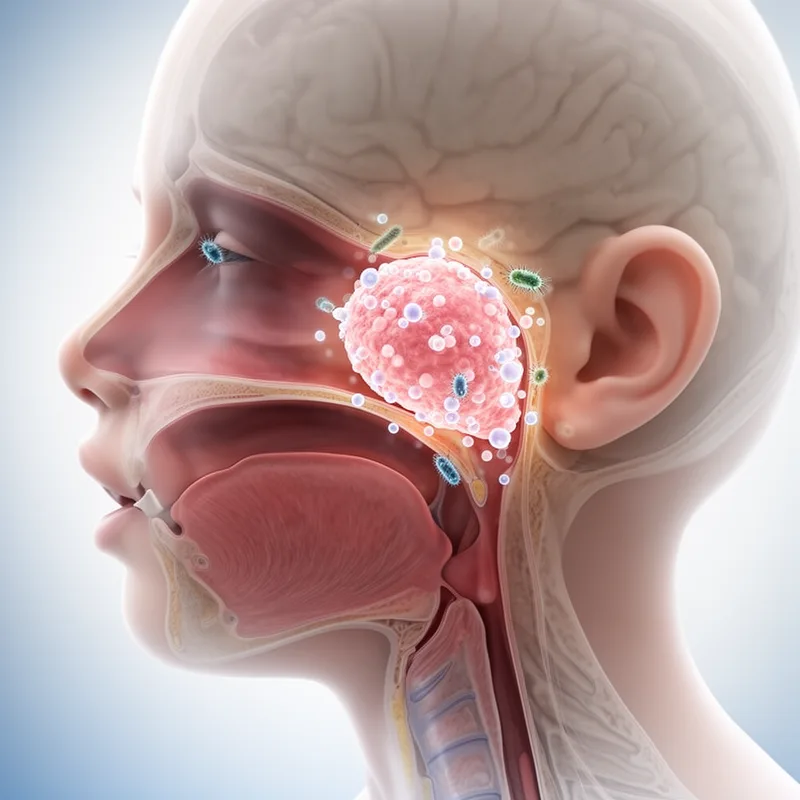
- The tonsilla pharyngealis is located at the back of the nasal cavity above the soft palate.
Examples
-
When the tonsilla pharyngealis becomes enlarged, it is commonly referred to as adenoids.
-
Doctors may recommend removal of the tonsilla pharyngealis if it causes breathing difficulties in children.
-
The tonsilla pharyngealis is crucial for immunity.
-
Is the tonsilla pharyngealis larger in children?
-
The doctor explained that the tonsilla pharyngealis plays a role in the immune system by trapping germs.
-
Children often have their tonsilla pharyngealis checked for enlargement during routine medical exams.
-
If the tonsilla pharyngealis obstructs the airway, surgery might be necessary to improve breathing.
Synonyms

 5
7.4
5
7.4

A mass of soft tissue behind the nose that can swell in children

A small patch of tissue at the back of the nose that helps fight infections
A soft lump of tissue at the back of the nose that can block breathing

A mass of soft tissue at the back of the nose that can block breathing

A mass of soft tissue at the back of the nose that can block breathing
Surface Forms
Morphology
tonsilla + pharyngealis
The term is a straightforward Latinate compound of 'tonsilla' (tonsil) and 'pharyngealis' (pharyngeal), so a learner who knows both constituents can infer it denotes the tonsil located in the pharynx (the pharyngeal tonsil/adenoids). The noun+adjective anatomical naming pattern is regular and mirrors equivalent forms in many languages, making the meaning directly derivable from the parts.
Etymology
Tonsilla pharyngealis comes from Latin and literally names a small tonsil in the throat area: tonsilla means 'small tonsil' and pharyngealis means 'in the pharynx'. Think of it as a small lump of immune tissue sitting on the back wall of the nose and throat, and that's why doctors also call it the 'adenoids' when it becomes enlarged.