

tonsilla adenoidea
- noun
- /tɒnˈsɪlə ˌædɪˈnɔɪdɪə/
- Specialized
- Enlargement of the tonsilla adenoidea can cause breathing difficulties in children.
Examples
-
Inflammation of the tonsilla adenoidea is often referred to as adenoiditis.
-
The surgeon recommended removal of the tonsilla adenoidea to relieve chronic infections.
-
The tonsilla adenoidea is crucial for immune function.
-
What is the function of the tonsilla adenoidea?
-
Enlargement of the tonsilla adenoidea can cause breathing difficulties in children.
-
Inflammation of the tonsilla adenoidea is often referred to as adenoiditis.
-
The surgeon recommended removal of the tonsilla adenoidea to relieve chronic infections.
Synonyms

 5
7.4
5
7.4

A mass of soft tissue behind the nose that can swell in children

A mass of soft tissue at the back of the nose above the throat that helps fight infection

A small patch of tissue at the back of the nose that helps fight infections
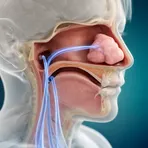
A soft lump of tissue at the back of the nose that can block breathing

A mass of soft tissue at the back of the nose that can block breathing
Surface Forms
Morphology
tonsilla + adenoidea
This is a technical Latin medical term built from specialist roots rather than everyday English words; the constituents are not common vocabulary and are marked as not found in the dictionary. Although the form is compositional (relating to tonsil/adenoid roots and thus hints at lymphatic tissue), the exact anatomical referent and nuance require domain knowledge, so the relation is only partly transparent to a B1 learner.
Etymology
Tonsilla adenoidea comes from Latin and Greek words: tonsilla means 'little tonsil' and adenoidea means 'gland-like'. These words describe the small, gland-like bits of tissue at the back of the nose, so the name is used for the 'adenoids' today.