

third cranial nerve
- noun
- /θɜrd ˈkreɪniəl nɜrv/
- Specialized
- The third cranial nerve plays a crucial role in moving the eye upward, downward, and inward.
Examples
-
A neurological exam may test the function of the third cranial nerve by checking pupil response.
-
Damage to the third cranial nerve can cause double vision and drooping of the eyelid.
-
The third cranial nerve is essential for eye movement.
-
Many doctors study the third cranial nerve during their training.
-
The third cranial nerve is essential for proper eye movement and pupil response.
-
If the third cranial nerve is damaged, it can lead to double vision and difficulty focusing.
-
Doctors often assess the function of the third cranial nerve during routine eye examinations.
Synonyms
 1
9.9
1
9.9

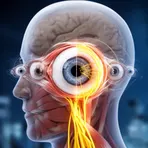
A nerve that controls most eye movements and changes pupil size
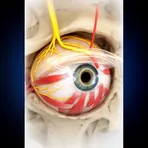
A nerve that moves most eye muscles and controls the eyelid and pupil

A nerve that controls most muscles that move the eye
Surface Forms
Morphology
The phrase is fully compositional: 'third' (ordinal) + 'cranial' (of the skull/head) + 'nerve' clearly yields 'the third nerve in the head', so a B1 learner who knows the constituents can infer the referent. Detailed anatomical functions (oculomotor role, pupil control) are specialist information, but the basic meaning is directly derivable and mirrored in other languages (e.g., 'tercer nervio craneal'), supporting transparency.
Etymology
Third cranial nerve names one of the nerves in the head: third because it is number three, cranial because it is in the head, and a nerve is like a thin cable that carries messages. Think of it as the number-three cable that 'moves the eye' and 'controls the pupil', which is why the term refers to the nerve that moves the eyeball and changes pupil size.