
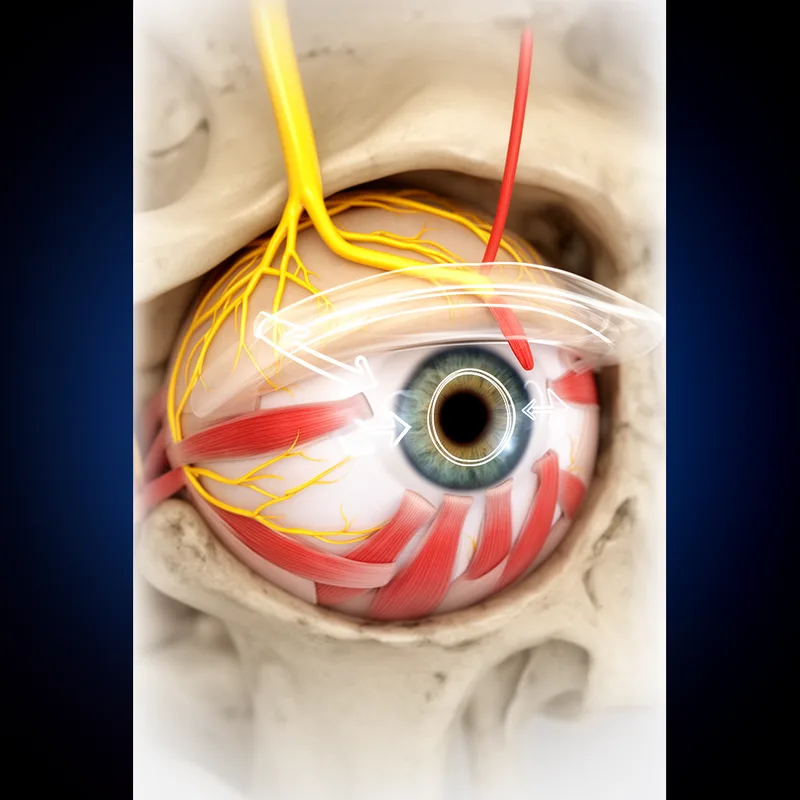
nervus oculomotorius
- noun
- /ˈnɜrvəs ˌoʊkjʊloʊˈmoʊtəriəs/
- Specialized
- Damage to the nervus oculomotorius can cause double vision and drooping of the eyelid.
Examples
-
Proper functioning of the nervus oculomotorius is essential for coordinated eye movement.
-
The surgeon carefully avoided the nervus oculomotorius during the procedure.
-
The nervus oculomotorius is crucial for eye movement.
-
Damage to the nervus oculomotorius can cause double vision.
-
Damage to the nervus oculomotorius can cause double vision and drooping of the eyelid.
-
Proper functioning of the nervus oculomotorius is essential for coordinated eye movement.
-
The surgeon carefully avoided the nervus oculomotorius during the procedure.
Synonyms
 1
9.9
1
9.9

A nerve that controls most eye movements and changes pupil size
A nerve that moves most eye muscles and controls pupil size

A nerve that controls most muscles that move the eye
Surface Forms
Morphology
nervus + oculomotorius
The term is a straightforward Latin anatomical compound combining 'nervus' (nerve) with 'oculomotorius' (eye-moving), so the meaning 'the nerve that moves the eyeball and controls eyelid and pupil' is directly derivable from its parts. Anatomical naming conventions using Latin/Greek combining forms are compositional and cross-linguistically consistent, so a learner who knows the constituent elements would understand it.
Etymology
Nervus oculomotorius comes from Latin and literally names its job: nervus means 'nerve', oculo means 'eye', and motorius means 'to move'. So the name gives a clear image — it is the nerve that helps the eye and eyelid move, which is why we use it today for the nerve that controls eye movement.