
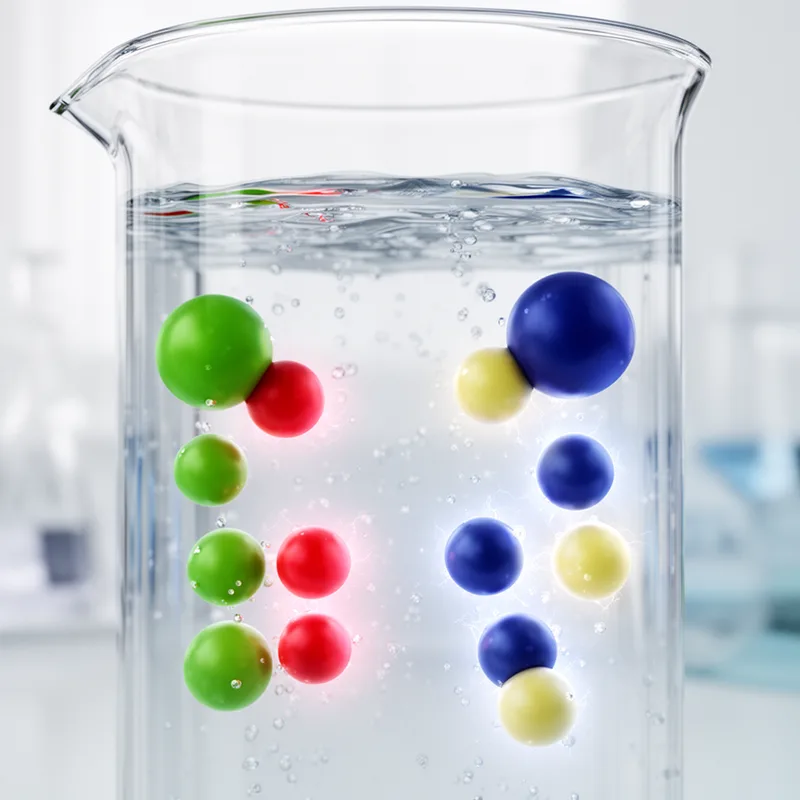
theory of dissociation
- noun
- /ˈθiəri əv dɪˌsoʊsiˈeɪʃən/
- Specialized
- According to the theory of dissociation, hydrochloric acid produces hydrogen ions when dissolved in water.
Examples
-
The theory of dissociation is fundamental in understanding acid-base reactions.
-
Many foundation-level chemistry textbooks introduce students to the theory of dissociation early on.
-
The theory of dissociation revolutionized our understanding of how acids and bases behave in water.
-
Can you explain the theory of dissociation to me?
-
According to the theory of dissociation, hydrochloric acid produces hydrogen ions when dissolved in water.
-
Many foundation-level chemistry textbooks introduce students to the theory of dissociation early on.
-
The theory of dissociation revolutionized our understanding of how acids and bases behave in water.
Synonyms

Acids break into hydrogen ions and bases into hydroxide ions in water, forming salt and water

A chemistry idea that acids, bases, and salts split into charged particles in water
Surface Forms
Morphology
theory + of + dissociation
The phrase is fully compositional: 'theory' (a set of ideas) combined with 'of' and 'dissociation' (splitting into ions) straightforwardly yields 'a theoretical explanation of dissociation.' The 'theory of X' construction is common cross-linguistically, so a B1 learner who knows the constituent words would readily infer the meaning despite its technical subject matter.
Etymology
Theory of dissociation comes from the simple image of a substance splitting into pieces when it goes into water; the word dissociation means 'breaking apart'. So the phrase names the idea that acids and bases break into tiny charged parts called 'ions' in water, and this explains how they react to form salt and water.

