
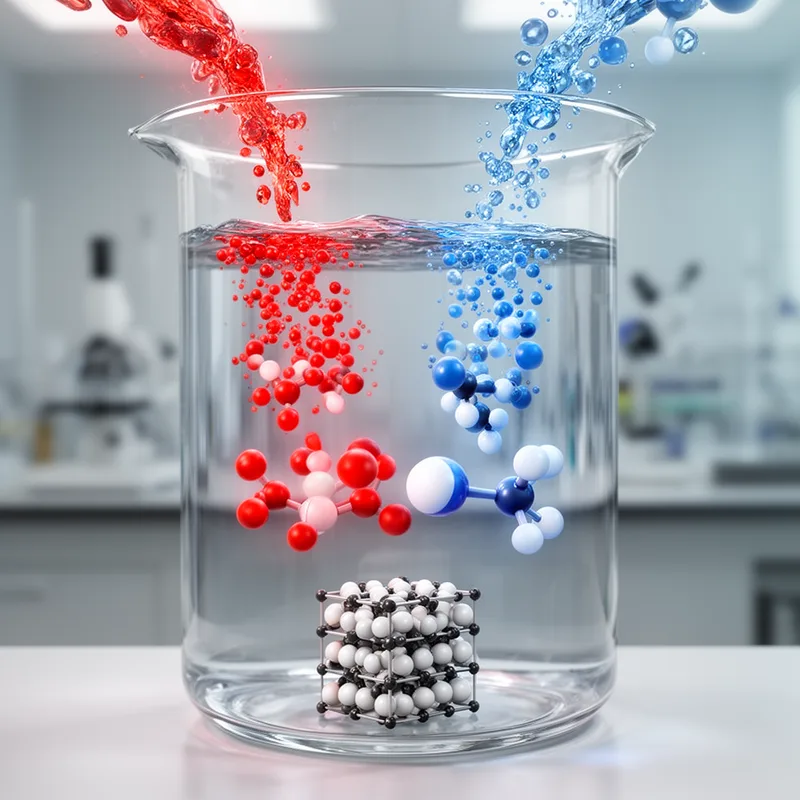
Arrhenius theory of dissociation
- noun
- /ˈærəˌniəs ˈθɪəri əv dɪˌsoʊsiˈeɪʃən/
- Specialized
- According to the Arrhenius theory of dissociation, mixing an acid and a base yields salt and water.
Examples
-
According to the Arrhenius theory of dissociation, acids release hydrogen ions.
-
The Arrhenius theory of dissociation explains how acids release hydrogen ions in solution.
-
In high school chemistry, we studied the Arrhenius theory of dissociation to understand reactions in aqueous solutions.
-
The Arrhenius theory of dissociation explains how acids behave in water.
-
According to the Arrhenius theory of dissociation, mixing an acid and a base yields salt and water.
-
In high school chemistry, we studied the Arrhenius theory of dissociation to understand reactions in aqueous solutions.
-
The Arrhenius theory of dissociation explains how acids release hydrogen ions in solution.
Synonyms

An explanation of how acids and bases split into charged particles in water

A chemistry idea that acids, bases, and salts split into charged particles in water
Surface Forms
Morphology
Arrhenius + theory + of + dissociation
The phrase is compositionally built: 'theory' + 'of' + 'dissociation' clearly denotes a theoretical account about dissociation, and 'Arrhenius' is a proper name marking the originator of that theory rather than adding opaque meaning. A B1 learner who knows the constituent words can therefore infer it refers to Arrhenius's theory explaining dissociation in chemistry.
Etymology
Arrhenius theory of dissociation is named after scientist Svante Arrhenius, who pictured substances in water breaking apart, or 'dissociate', into charged pieces. He said acids give hydrogen ions and bases give hydroxyl ions, so mixing them makes salt and water.

