

tamanoir
- noun
- /ˌtæməˈnɔɪr/
- A tamanoir uses its long tongue to extract ants and termites from their nests.
Examples
-
The tamanoir is native to the grasslands and forests of Central and South America.
-
Conservationists are working to protect the habitat of the tamanoir in Brazil.
-
The tamanoir is a fascinating creature.
-
Many people have never seen a tamanoir in the wild.
-
A tamanoir uses its long tongue to extract ants and termites from their nests.
-
Conservationists are working to protect the habitat of the tamanoir in Brazil.
-
The tamanoir is native to the grasslands and forests of Central and South America.
Synonyms

A large South American animal with a very long nose and tongue that eats ants

A large mammal from South America with a long tongue and claws that eats ants and termites
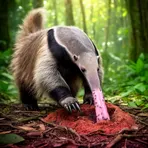
A large hairy South American mammal with a long tongue and strong claws for eating ants

A large furry animal from South America with a long snout and tongue that eats ants
How Big

- Specialized
Surface Forms
Etymology
The word tamanoir comes from the French name for the giant anteater, which itself comes from a South American native word such as tamanduá and is related to English tamandua. So, a tamanoir is literally an 'ant-eater', which explains its long tongue and habit of eating ants and termites.

