
supermolecule
- noun
- /ˈsuːpərˌmoʊkjul/
- Specialized
- Researchers are studying how a supermolecule can self-assemble in biological systems.
Examples
-
Proteins are one type of supermolecule essential for life.
-
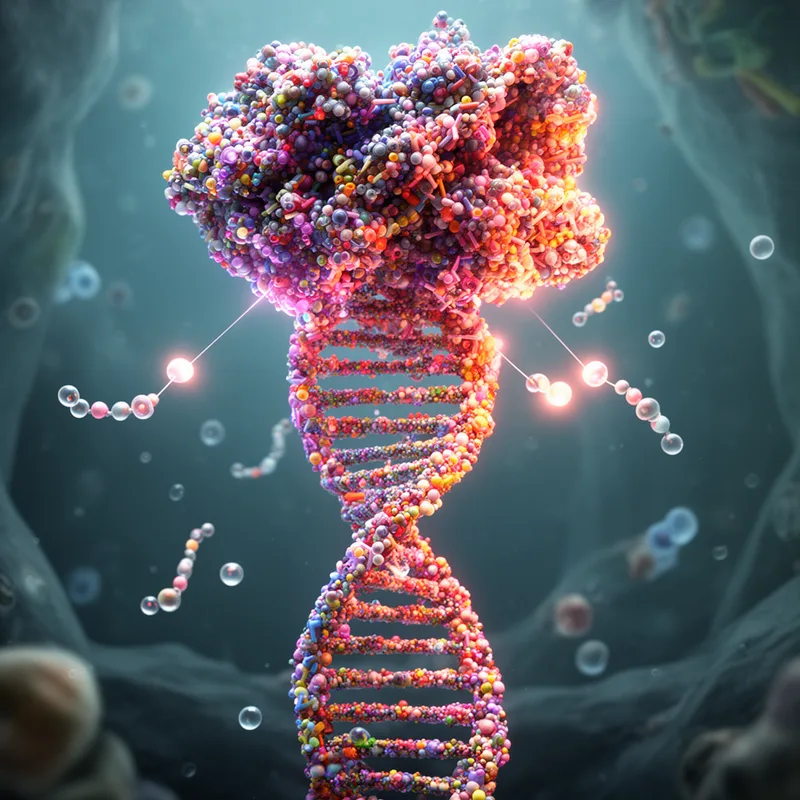
DNA is often cited as a classic example of a biological supermolecule.
-
A supermolecule can consist of thousands of atoms.
-
The research team discovered a new supermolecule in the lab.
-
Scientists are studying how supermolecules play a role in cellular function.
-
The development of new drugs often involves creating supermolecules that can target specific diseases.
-
Supermolecules can exhibit unique properties that are not found in their smaller counterparts.
Synonyms

 38
6.3
38
6.3

A very large molecule made of many small repeated parts, like plastics or proteins
 1
3.7
1
3.7
A molecule that living things make, like proteins or DNA
 1
7.3
1
7.3
A very large chemical made of many smaller parts like proteins or DNA
 1
3.9
1
3.9
A long chain of amino acids that helps cells work and keep their shape
A group of proteins that join to work together in a cell
How Large

Surface Forms
Morphology
Etymology
The word supermolecule comes from super- ('above' or 'beyond') and molecule ('a small unit of matter'), so it means a 'super' or larger molecule made of many smaller molecules, which is why we use it for big, complex molecules in living things.