

sublingual
 1
7.5
1
7.5

- adjective
- /ˌsʌbˈlɪŋɡwəl/
- Specialized
- The use of sublingual nitroglycerin was allowed if chest pain occurred.
- sublingual administration
- sublingual gland
- sublingual nitroglycerin
Loading YouTube…
Watch on YouTubeI do take sublingual NMN, but it's very important.
- I do take sublingual NMN, but it's very important.
- But I've opted to take sublingual NMN mostly based on cost and our at the dosages people recommend is quite expensive.
- I use Arnica regularly, which is, you know, which is great both as a topical gel and then also as a sublingual pill.
Examples
-
I now supplement with sublingual B12 (1000 mcg), and I still by no means have 'high' B12 levels.
Blog text (20) -
Homocysteine can be lowered with small but significant doses of Vitamin B-12 sublingual and Folic Acid (another B vitamin).
Blog text (3) -
At this point, the sublingual salivary gland was recognized and appeared normal.
Academic text (2008) -
The most common pitfall during excision is a failure to remove the sublingual gland completely; such a failure increases the risk of recurrence.
Academic text (2003) -
The chest pain had not progressed from the time of onset, and the symptoms resolved spontaneously or with sublingual nitroglycerin.
Academic text (1994) -
The normal-appearing sublingual salivary gland was also identified and confirmed as functionally unattached to the mass.
Academic text (2008) -
The three major paired salivary glands—the parotid, the sublingual, and the submandibular—produce 90% of the total salivary output.
Academic text (1999) -
The doctor recommended using a sublingual tablet for faster relief from the allergy symptoms.
-
For the quickest effect, the patient was instructed to take the medication in a sublingual form beneath her tongue.
-
The sublingual tablet dissolved quickly to provide rapid absorption into the bloodstream.
Compounds
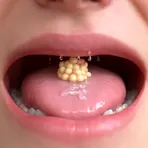
- Specialized
A small part under the tongue that makes saliva to keep the mouth moist


- Specialized
A small part under the tongue that makes saliva to keep the mouth moist
Surface Forms
Morphology
Etymology
Sublingual comes from the parts sub- meaning 'under' and lingua meaning 'tongue', the same root you see in language and linguist. So, sublingual describes something 'under the tongue', like a tablet placed there to work faster.