
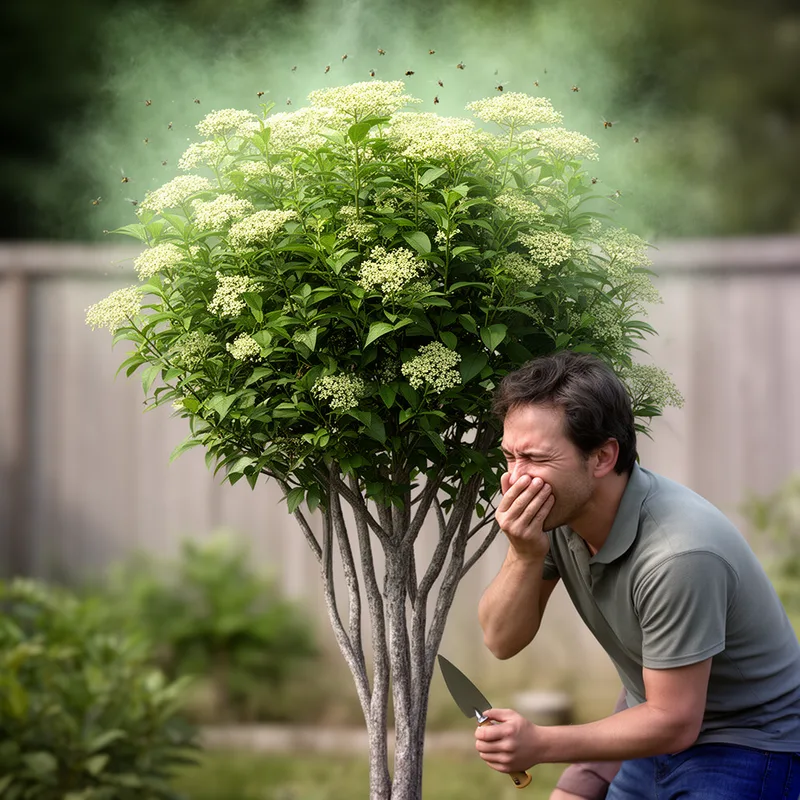
stinking elder
- noun
- /ˈstɪŋkɪŋ ˈɛldər/
- US
- Some gardeners avoid planting stinking elder because of its distinctive odor.
Examples
-
The grove behind the house was filled with stinking elder and wildflowers.
-
Many people dislike the smell of stinking elder flowers.
-
Botanists identified the unusual bush as a stinking elder native to the region.
-
The stinking elder grows abundantly in wet areas.
-
Many people find the smell of stinking elder flowers quite unpleasant.
-
In spring, the stinking elder adds a distinct aroma to the garden.
-
The stinking elder bush thrives in moist environments, often found near rivers.
Synonyms

 6
5.6
6
5.6

A small tree with white flowers that makes dark berries

A small tree or bush from North America that has clusters of red berries
A bush or small tree that has clusters of bright red berries

A shrub with clusters of dark purple berries used to make wine and jam

A small tree or bush with clusters of bright red berries

A small tree or shrub that has white flowers and small dark berries
Surface Forms
Morphology
The phrase is a straightforward adjective + noun composition: 'stinking' (smelly) modifies 'elder' (a type of shrub), so the meaning 'an elder shrub that smells unpleasant' is directly derivable from the constituents. This compositional pattern is common cross-linguistically and would be understandable to a B1 learner who knows both words.
Etymology
Stinking elder comes from a simple image: elder is a common shrub or small tree and stinking means it gives off a strong, bad smell. So the name describes a shrub known for its 'unpleasant smell'.