
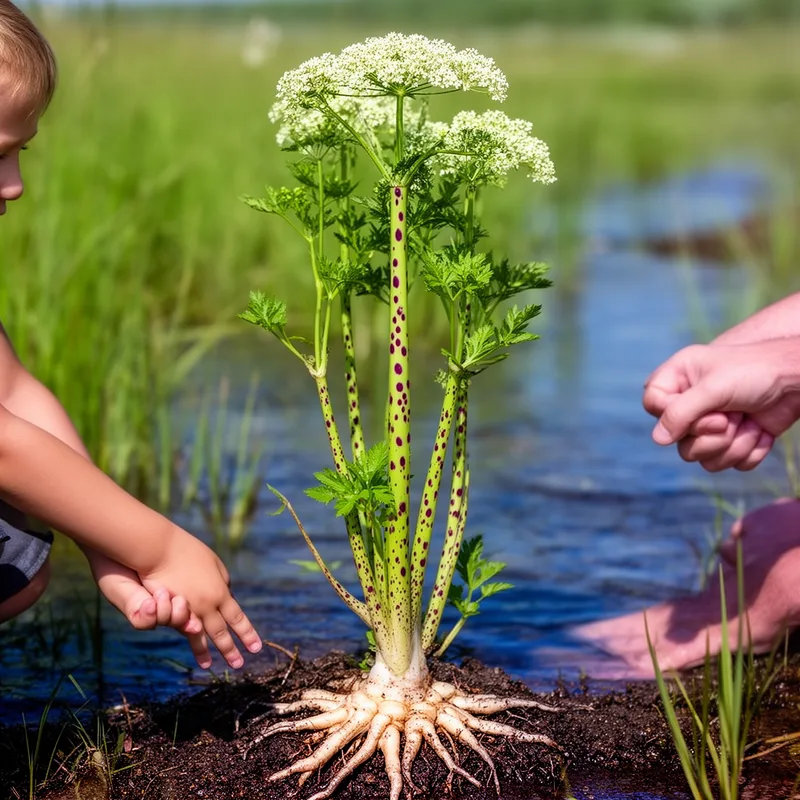
spotted water hemlock
- noun
- /ˈspɑːtɪd ˈwɔːtər ˈhɛmˌlɑk/
- US
- Despite its resemblance to edible plants, spotted water hemlock is one of the most poisonous plants native to North America.
Examples
-
The purple-spotted stems make spotted water hemlock easy to identify in wet meadows and stream banks.
-
Children should be taught to recognize spotted water hemlock, as its roots are extremely toxic and can be deadly if eaten.
-
The spotted water hemlock is known for its toxic properties.
-
Many animals avoid the spotted water hemlock due to its poison.
-
The spotted water hemlock is known for its purple-spotted stems and can be deadly if consumed.
-
Hikers should be cautious of the spotted water hemlock, as it is one of the most toxic plants in North America.
-
Farmers are advised to remove spotted water hemlock from their fields to prevent livestock poisoning.
Synonyms

A tall poisonous plant with purple-spotted stems and roots like small potatoes
A tall plant with purple spots on its stems and very poisonous roots that grow in wet places

A tall very poisonous plant that grows near streams and has leaves and roots that can kill animals or people
Surface Forms
Morphology
The phrase is a straightforward modifier + noun combination: 'spotted' (having spots) describes the 'water hemlock' (a type of poisonous hemlock associated with wet habitats). A B1 learner who knows each constituent can readily infer it refers to a spotted variety of the water-associated poisonous plant, so the meaning is compositionally transparent.
Etymology
Spotted water hemlock gets its name from three simple images: the purple spotted stems, its common place near water, and the way it looks like other poisonous hemlock plants. So the name is a clear warning that this plant is 'poisonous' and can be 'deadly' if eaten.

