

spotted cowbane
- noun
- US
- The roots of spotted cowbane can be fatal if mistakenly eaten.
Examples
-
The wet meadows were thick with spotted cowbane, which is highly toxic to livestock.
-
Naturalists warn hikers to avoid touching spotted cowbane when exploring marshy areas.
-
The spotted cowbane is a dangerous plant to touch.
-
Many animals avoid the spotted cowbane due to its toxicity.
-
Naturalists warn hikers to avoid touching spotted cowbane when exploring marshy areas.
-
The roots of spotted cowbane can be fatal if mistakenly eaten.
-
The wet meadows were thick with spotted cowbane, which is highly toxic to livestock.
Synonyms
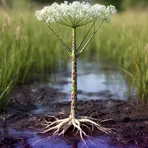
A tall plant with purple spots on its stems and very poisonous roots that grow in wet places

A tall poisonous plant with purple-spotted stems that grows near water and whose roots are deadly if eaten
Surface Forms
Morphology
This is a straightforward adjective + noun composition: 'spotted' simply modifies 'cowbane', so a learner who knows 'cowbane' (a poisonous plant) and 'spotted' can infer it is a poisonous plant with spots. The meaning is literal and compositionally predictable following common noun-modifier patterns, making it immediately understandable to a B1 learner who knows the constituents.
Etymology
The name spotted cowbane comes from how the plant looks and how dangerous it is. It has purple marks that make it spotted, and its poisonous roots could kill cows, so people called it cowbane, with 'bane' meaning 'killer'.

