
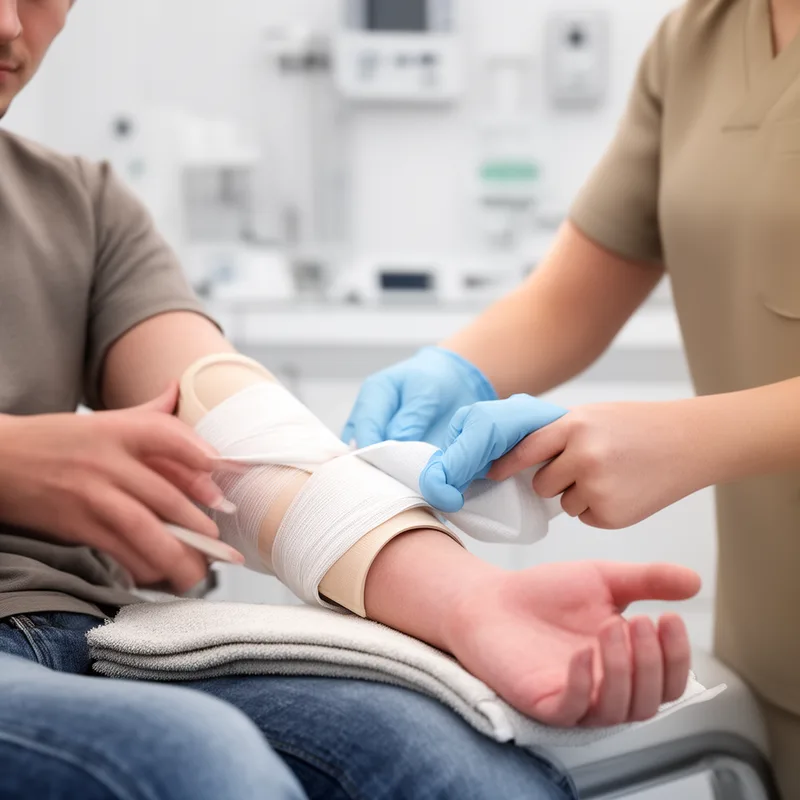
splinting


 1
4.0
1
4.0
- noun
- /ˈsplɪntɪŋ/
- Specialized
- Our findings also raise important issues about the effectiveness of abduction splinting, which has not been assessed in a randomized trial.
- abduction splinting
- prophylactic splinting
- immediate splinting
Examples
-
Secondary outcomes included surgical treatment, abduction splinting, level of mobility, resource use, and costs.
Academic text (2002) -
After correction of the clubfoot, splinting is essential in preventing a recurrence of the deformity.
Academic text (2005) -
Usual care included joint-protection education and splinting, where indicated, with 1.5 hours of contact time. Outcomes
Academic text (2015) -
Another roll of plaster was applied with five layers of splinting over the plantar surface and toe areas.
Academic text (1995) -
If ultrasonography showed significant hip displacement or instability, we recommended immediate splinting.
Academic text (2002) -
Splinting was discontinued at three weeks or when fractures were no longer tender to palpation (clinical healing).
Academic text (2015) -
The doctor explained that proper splinting can help support the healing process of a fractured wrist.
-
For his ankle injury, the coach recommended splinting to prevent any further movement during recovery.
-
After the accident, splinting was necessary to keep her injured leg stable until she reached the hospital.
Synonyms
Using a firm support to hold an injured arm or leg still so it can heal
To keep a body part still with a cast or splint so it heals
Antonyms


How Immobilized

Surface Forms
Morphology
Etymology
The word splinting comes from splint, which once meant a 'small, thin piece of wood', like the word splinter. So, splinting is putting a firm piece along a hurt arm or finger to keep it still and help it heal.