
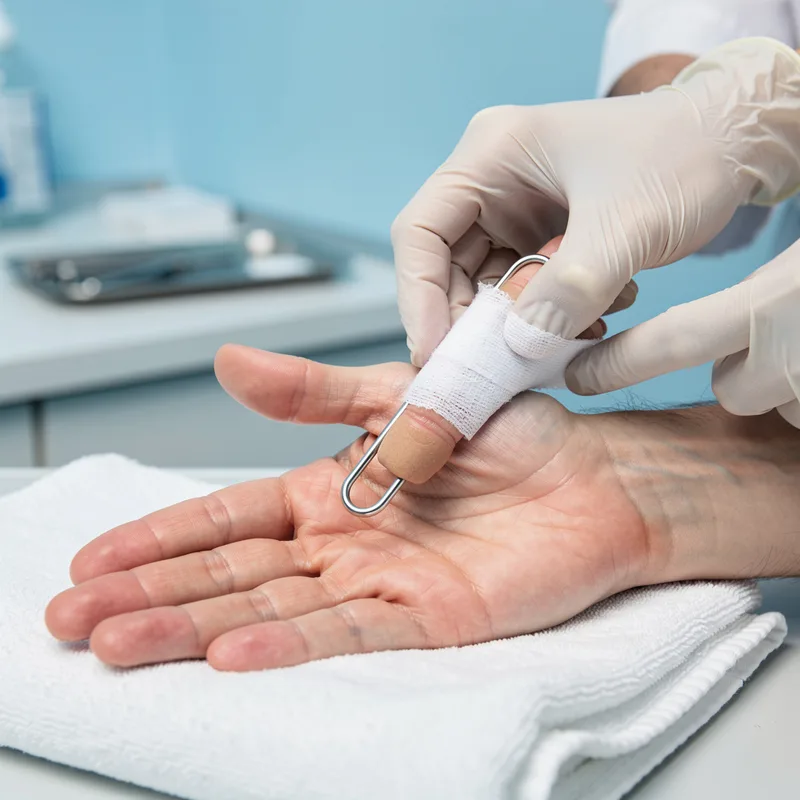
to splint
 5
5.4
5
5.4

- verb
- /splɪnt/
- Specialized
- I'm splinting it.
- splint the injured limb
- splint a broken
- splint my leg
Examples
-
She used a piece of cardboard to splint the broken finger until we could see a doctor.
-
- I gotta splint this.
-
I can splint a broken arm, but I am no doctor.
Blog text (30) -
I'll try to splint it.
-
Dr. DiAngelo would splint Victor's finger.
Fiction book (1998) -
I can heal a rash, soothe a fever, and splint certain leg breaks.
Fiction book (2000) -
The paramedics immobilized Matt's neck with a hard cervical collar, splinted his left leg, and placed him on a backboard.
Academic text (2005) -
The doctor carefully placed a splint on the injured wrist to keep it still.
-
After the accident, we needed to splint his leg to prevent further injury.
Synonyms
 82
7.7
82
7.7
To make something stable by fixing ropes or braces
 52
2.9
52
2.9
To fasten something with a band so it stays in place
 47
3.3
47
3.3
Fasten something tightly to keep it from moving
Compounds

How Immobilizing

Surface Forms
Etymology
The word splint used as a verb comes from the noun splint, a thin strip of wood, so to splint is to put that support on a hurt part to keep it still. In other words, to splint someone is to support and protect an injured body part.