
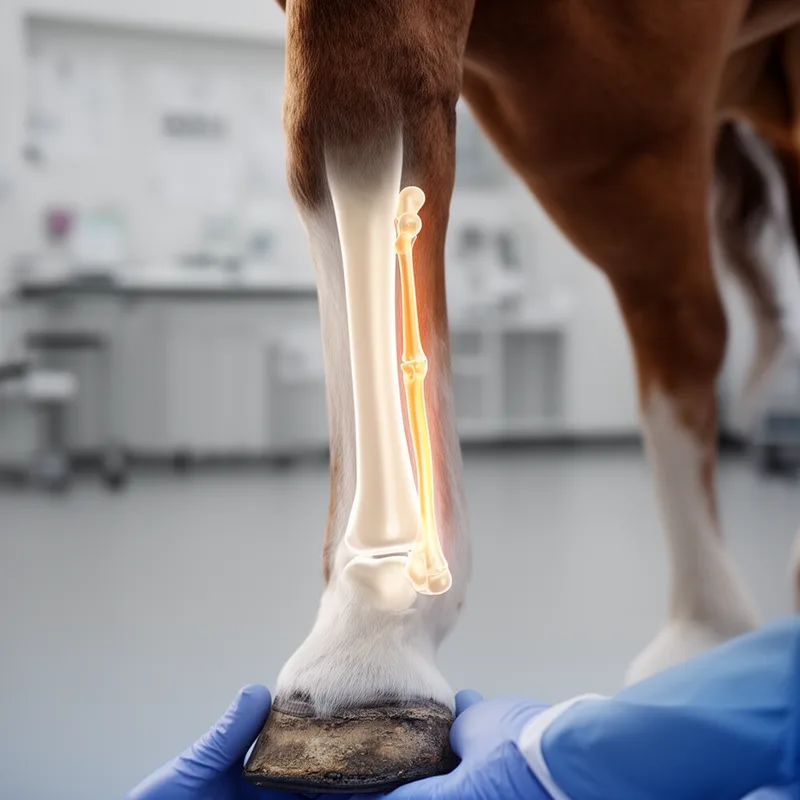
splint bone
- noun
- /splɪnt boʊn/
- Specialized
- The horse's splint bone is crucial for its leg stability.
Examples
-
The veterinarian examined the horse’s splint bone for signs of injury.
-
Foals are sometimes born with an underdeveloped splint bone that fuses as they mature.
-
Swelling around the splint bone may indicate inflammation or fracture.
-
Veterinarians often examine the splint bones for injuries.
-
The veterinarian explained that the horse's injury involved the splint bones next to the main leg bone.
-
During the examination, the trainer pointed out the horse's splint bones and how they support its leg structure.
-
The splint bones on this horse are essential for its movement and overall health.
Surface Forms
Morphology
The compound combines 'splint' (a device that stabilizes an injured limb) with 'bone', so a learner who knows both words can infer it denotes a type of bone that functions like or resembles a splint (i.e., a slender/supportive bone). However, the precise anatomical referent (the specific rudimentary bones beside the cannon bone in horses) is specialist knowledge and not fully predictable from the constituents alone, so the transparency is partial.
Etymology
Splint bone got its name because the thin bones run along the main leg bone like a splint, a small strip used to hold and 'support' an injured limb. So splint bone refers to those narrow bones that act as little supports beside a horse's main leg bone.

