
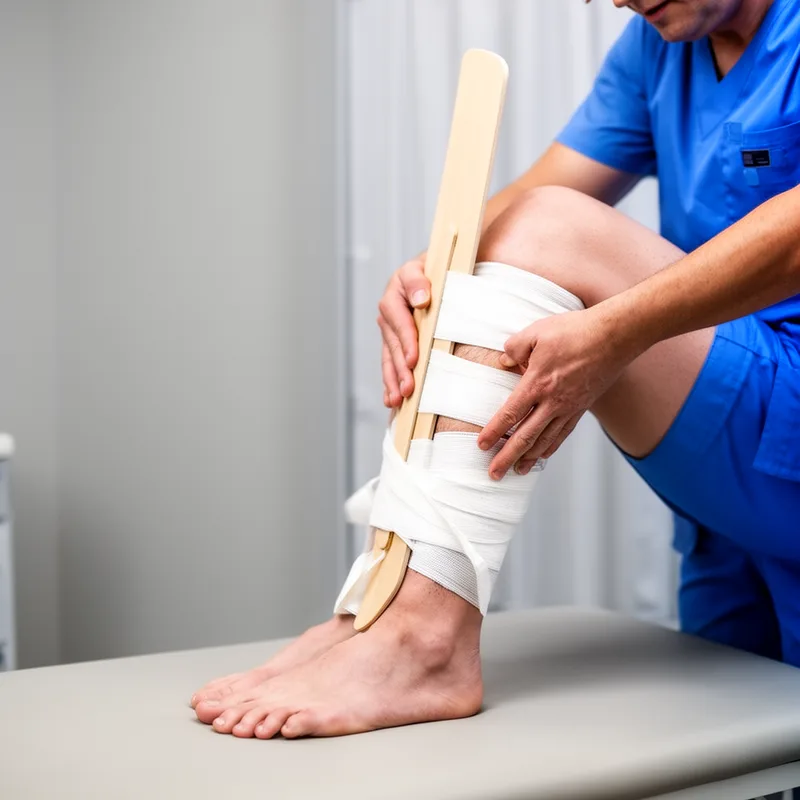
splintage
8.2
Using a firm support to hold an injured arm or leg still so it can heal
- noun
- /ˈsplɪn.tɪdʒ/
- Specialized
:
inmovilización
- The doctor recommended splintage to stabilize her fractured wrist while it healed.
Examples
-
After the accident, he underwent splintage to ensure proper alignment of his broken leg.
-
The athlete's recovery plan included splintage for her ankle injury to prevent further damage.
-
Unsworth-White et al. concluded that extension splintage was superior to immobilization in flexion (6).
Academic text (2007)
Synonyms


 1
4.0
1
4.0
Putting a firm support on a hurt body part to keep it still
is the application of a rigid support as treatment to keep the injury stable

6.7
To keep a body part still with a cast or splint so it heals
is the specific use of a rigid support to keep an injury stable
How Immobilizing

Surface Forms
splintage singular
splintages plural
Morphology
Etymology
Splintage comes from the simple word splint and the ending -age, which means 'the act or result of'. A splint is a piece used to 'keep something still', so splintage is the act of fitting a splint to keep an injured part stable while it heals.