

special theory of relativity
 1
6.1
1
6.1

- noun
- /ˈspɛʃəl ˈθiəri əv rɪˈlætɪvɪti/
- Specialized
- Einstein's special theory of relativity, published in 1905, tells us that space and time are inexorably linked together into what we now call space-time.
- Einstein's special theory of relativity
Loading YouTube…
Watch on YouTubeAnd so it turns out in special, in the special theory of relativity, it describes what happens when you move through a pre-existing space and time.
- And so it turns out in special, in the special theory of relativity, it describes what happens when you move through a pre-existing space and time.
Examples
-
Better known as the special theory of relativity, the concepts advanced in that paper forever changed the understanding of space and time.
Academic text (2003) -
According to the special theory of relativity, clocks in motion beat more slowly than clocks at rest.
Academic text (1996) -
In 1905, Einstein changed forever our views of space and time by publishing his special theory of relativity.
Academic text (1991) -
It was Albert Einstein with his special theory of relativity who showed us that all causal effects in our universe can only propagate at the speed of light, c.
Academic text (2005) -
In 1905, Albert Einstein, then a patent clerk in his native Switzerland, derived his famous relationship between mass and energy, E=mc², as a consequence of the special theory of relativity.
Academic text (2001) -
In 1905, Albert Einstein introduced the special theory of relativity, which revolutionized our understanding of space and time.
-
The special theory of relativity explains how the laws of physics apply equally in all inertial frames of reference.
-
Einstein's special theory of relativity asserts that the speed of light remains constant for all observers, regardless of their motion.
Synonyms
 43
8.1
43
8.1
A theory in physics that space and time change depending on how you move
 12
6.7
12
6.7
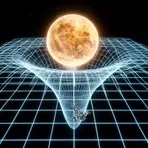
A scientific idea that space and time are linked and change with motion and gravity
 2
7.1
2
7.1
A theory that says physics works the same for all objects moving at constant speed and light speed is constant
 1
6.5
1
6.5
A scientific idea by Einstein that space and time depend on how fast something moves

A physics idea that light moves at the same speed and time and space change for moving people

A 1905 Einstein theory saying time and space change because light's speed is always the same
Surface Forms
Morphology
special + theory + of + relativity
The phrase is compositionally built from its parts: 'special' (a particular kind), 'theory' (a systematic explanation) and 'relativity' (relations of space and time). This standard 'X theory of Y' naming pattern is cross-linguistically common, so a B1 learner who knows the constituents can infer it denotes a particular theory about relativity, even if they may not know the historical details.
Etymology
Special theory of relativity: The name special theory of relativity comes from Einstein calling this a special case that looks only at people moving at a steady speed, and relativity because things like time and distance can be different for different observers. So the name helps you remember that the theory explains why the speed of light is 'constant' for everyone and why time or length can change with motion.