
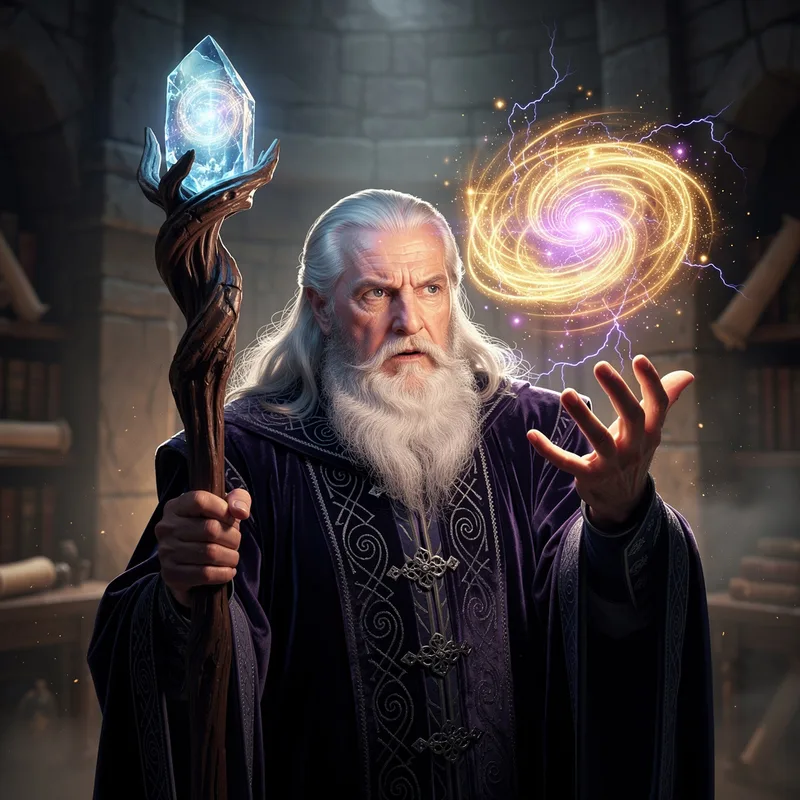
sorcerer
 107
7.9
107
7.9

- noun
- /ˈsɔrsərər/
- Literature
- According to legends, a sorcerer could control the elements and bend them to his will.
- witches and sorcerers
- magicians and sorcerers
- sorcerer's apprentice
Loading YouTube…
Watch on YouTubeThere are no Wizards or witches or sorcerers or anything like that.
- There are no Wizards or witches or sorcerers or anything like that.
- They would view you as a wizard or sorcerer.
- And they're like, well, do you think she might be dreaming of witches and sorcerers and demons when she's sleeping?
- It's the soldier, it's the nun, it's the student who is going to become the scientist, it's the sorcerer's apprentice.
- If you go back to when Moses confronted Pharaoh and Pharaoh's sorcerers or magicians, Moses threw down the rod of Aaron and it turned into a snake.
- And now there's a sorcerer, a thief, trying to come in.
- And she also talks about the other sorcerer who wasn't any good.
Examples
-
I wish to be the most powerful sorcerer in the world!
-
And I understood: Paul was an Indian sorcerer; he could be in two places at once.
Fiction book (1991) -
Only a great sorcerer can use it,
-
My dominions are well known to me, sorcerer.
-
He must be a sorcerer.
-
His brothers, jealous that he'd been sent to school, had hired a sorcerer to cast a spell on him.
Academic text (2012) -
Are you a sorcerer?
-
The king's sorcerer.
-
Vivien: You have wronged a great and powerful sorcerer who has come in peace from a distant land!
Fiction book (1998) -
In fact, if it weren't for sorcerers, there wouldn't be any dragons.
Synonyms
 790
4.1
790
4.1
A woman believed to have magical powers in stories
 260
4.6
260
4.6
A person who uses magic to do powerful or strange things
 245
3.6
245
3.6
A person who does tricks that look like magic or who people think has real powers
 108
8.6
108
8.6
A man who uses magic and is thought to work with evil spirits
 60
8.2
60
8.2
A person who talks to spirits and helps heal or guide people
 43
9.5
43
9.5
A person who uses magic in stories or myths
 41
9.9
41
9.9
A person in stories who can use magic to help or harm others
 18
8.2
18
8.2
A person in some cultures who uses rituals and plant medicines to heal people
 14
8.2
14
8.2
A woman who uses magic to change things
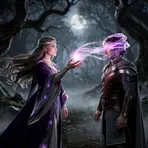 9
8.6
9
8.6
A woman in stories who uses magic to control people
 8
9.9
8
9.9
A person who uses magic to talk to or bring dead people back to life
 5
9.9
5
9.9
A person who studies or practices hidden spiritual powers like talking to spirits
 2
8.7
2
8.7
A person who uses magic to change people or things
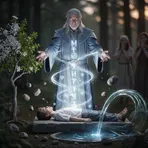 1
9.9
1
9.9
A person who does magic to make impossible things happen
 1
8.6
1
8.6
A person who claims to have magic powers to help or harm people
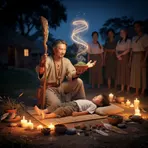 1
9.0
1
9.0
A person who uses magic and rituals that people think have real powers


 1
9.9
1
9.9
A person who uses secret magic to cast spells
 1
9.9
1
9.9
A woman who uses magic and casts spells
 1
9.9
1
9.9
A person who uses fire magic to control flames or tell the future

A person who does magic or seems to cause miracles

A person who uses magic to change things
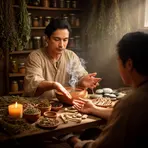
A man who uses traditional magic to heal people or tell the future

A man people think can use magic
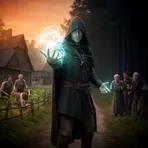
A person who uses magic in old stories
How Powerful

Surface Forms
Morphology
sorcerer = sorcer + er
Although the word ends in the common agentive suffix '-er', the base 'sorcer-' is not a productive modern English word, so most learners will not recover the meaning from the parts.
Etymology
Sorcerer comes from an old word sors that meant 'lot' or 'fate', because early magic workers would 'cast lots' to try to learn the future, so the idea was linked to changing or reading fate. That's why a sorcerer today is a person who uses magic or special powers to affect events.