
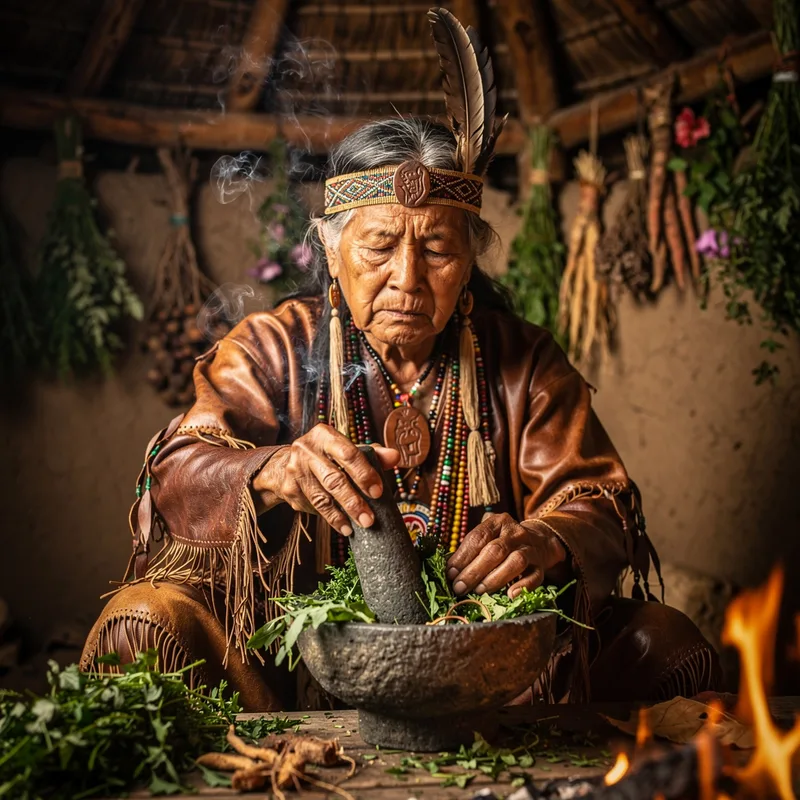
witch doctor
 18
8.2
18
8.2

- noun
- /ˈwɪtʃ ˈdɑːktər/
- The village relied on the witch doctor for remedies that combined herbs and ancient rituals.
- witch doctor or shaman
- witch doctor in his village
Loading YouTube…
Watch on YouTubeAnd we need pervert quack shaman doctors like this witch doctor in in San Francisco.
- And we need pervert quack shaman doctors like this witch doctor in in San Francisco.
Examples
-
There are witch doctors and swamp fever, and all the mothers and fathers die.
Fiction book (1998) -
I don't want some witch doctor.
-
In your culture, you would call him a witch doctor.
-
Not if you tell me where the witch doctor is.
-
You never heard of witch doctors?
-
Well, a witch doctor did bless me once.
-
Maybe I'm bad luck; maybe some witch doctor put a curse on me.
Fiction book (1997) -
You're telling me that I should take my daughter to a witch doctor.
-
That's the mask of the witch doctor.
-
The Batiri grabbed him and Rayburton when we went outside the wall to see the witch doctor.
Fiction book (1992)
Synonyms
 101
3.9
101
3.9
A person who helps others get better from physical or mental sickness, often using traditional ways
 19
7.4
19
7.4
A person in some tribes who heals people and leads spiritual rituals
 9
5.5
9
5.5
A person who uses plants to make medicine for health
 1
8.6
1
8.6
A person who claims to have magic powers to help or harm people


 1
9.9
1
9.9
A woman who uses folk magic to heal and help people
A person who talks with spirits to heal people or tell the future

A person who does magic or seems to cause miracles

A person who uses plant medicines to treat illnesses
Antonyms

How Supernatural
- Literature
107
7.9
 18
8.2
18
8.2
- Literature
3
9.9
101
3.9
Surface Forms
Morphology
The meaning 'a traditional healer who uses magical remedies' is directly and transparently composed from 'witch' (magic practitioner) + 'doctor' (healer/medical practitioner), so a learner who knows both words can infer a healer who uses magic or folk remedies. This compound pattern is cross-linguistically common for terms referring to traditional/shamanic healers, so it is likely understandable to a B1 learner without prior exposure.
Etymology
Witch doctor is a name early visitors used for local healers, putting witch (someone who uses magic) and doctor (a healer) together. One popular story says these healers used herbs, songs and rituals to try to 'heal' people, so the name now means a traditional healer believed to have 'magical' powers.