

mage
 43
9.5
43
9.5

- noun
- /meɪdʒ/
- "You've done well, mage," Burke said as he caught the man and helped to steady him.
- mages and priests
Loading YouTube…
Watch on YouTubeShe did study with a mage herself, as we find out.
- She did study with a mage herself, as we find out.
- Only Dujek and Tashrin, the High mage who betrayed the other mages.
- It's got the Arc mage of Earthsea.
Examples
-
"Are you sure you know what you're doing?" the mage asked as Artus stepped up to the rail.
Fiction book (1992) -
As the sun set, the mage conjured a spell that filled the sky with vibrant colors.
-
Enough, said the mage without raising his voice.
-
- Not everyone is a mage.
-
I know who you are, Mage.
-
I like your thinking, young mage.
-
So, who are you, mage?
-
As expected of a first class mage!
-
On the other hand, the mage had proven himself a force to be reckoned with.
Fiction book (1992) -
Brace yourself, young mage.
Synonyms
 790
4.1
790
4.1
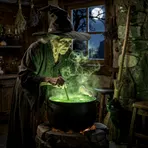
A woman believed to have magical powers in stories
 260
4.6
260
4.6
A person who uses magic to do powerful or strange things
 245
3.6
245
3.6
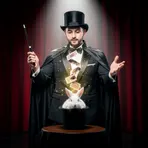
A person who does tricks that look like magic or who people think has real powers
 108
8.6
108
8.6
A man who uses magic and is thought to work with evil spirits
 107
7.9
107
7.9
A person who uses magic to make things happen
 41
9.9
41
9.9
A person in stories who can use magic to help or harm others
 14
8.2
14
8.2
A woman who uses magic to change things
 9
8.6
9
8.6
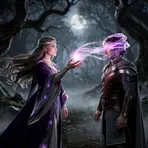
A woman in stories who uses magic to control people
 8
9.9
8
9.9
A priest in ancient Persia often seen as a wise man or magician
 2
8.7
2
8.7
A person who uses magic to change people or things
 1
8.6
1
8.6
A person who claims to have magic powers to help or harm people


 1
9.9
1
9.9
A person who uses secret magic to cast spells
 1
9.9
1
9.9
A woman who uses magic and casts spells
 1
9.9
1
9.9
A person who uses fire magic to control flames or tell the future

A person who uses very strong magic

A person who uses magic to change things

A man who uses traditional magic to heal people or tell the future

A man people think can use magic
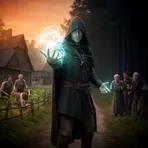
A person who uses magic in old stories
How Magical

Surface Forms
Etymology
Mage comes from an old word magus, a name for a Persian or Greek priest who was thought to have 'secret knowledge', and it is the same root as magic. So a mage today is a person with magical powers.