

snake fence
- noun
- /sneɪk fɛns/
- US
 :
valla de troncos
:
valla de troncos
- Many farms in Texas have snake fences to keep livestock in.
Examples
-
They decided to build a snake fence around their property using local timber.
-
The old farmhouse was surrounded by a snake fence that had weathered many winters.
-
A traditional snake fence adds rustic charm to the landscape.
-
The property is surrounded by a snake fence.
-
A traditional snake fence adds rustic charm to the landscape.
-
The old farmhouse was surrounded by a snake fence that had weathered many winters.
-
They decided to build a snake fence around their property using local timber.
Synonyms

 1
4.3
1
4.3

A fence made of long wooden rails laid in a zigzag to keep animals in


 1
4.8
1
4.8
A fence made from split logs stacked horizontally in a zigzag

A low wooden fence made of rails in a zigzag that marks a border

A fence made of wooden rails laid in a zigzag pattern
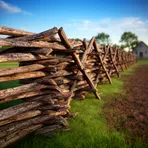
A wooden fence made of rails laid in a zigzag pattern without posts
Surface Forms
Morphology
The phrase describes a fence that is snake-like in form (a zigzag or curving arrangement), so the meaning is directly derivable from 'snake' (long, flexible/curving) + 'fence' (a barrier). This animal-shape metaphor is compositional and cross-linguistically common, so a B1 learner who knows both constituents would likely understand the intended meaning.
Etymology
The noun snake fence comes from the way wooden rails are set in a zigzag so the long line twists and looks like a snake, and the rails lock together with few posts. That's why 'snake fence' now means this simple, back-and-forth wooden fence often seen around farms in rural North America.