

sleep terror disorder
- noun
- /sliːp ˈtɛrər dɪsˈɔrdər/
- Specialized
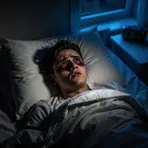
- Children with sleep terror disorder may wake up screaming and be inconsolable for several minutes.
Examples
-
Unlike nightmares, sleep terror disorder episodes happen during non-REM sleep and are rarely remembered.
-
Doctors may recommend counseling or medication to help manage sleep terror disorder in severe cases.
-
My brother suffers from sleep terror disorder.
-
Many children experience sleep terror disorders during their development.
-
Children with sleep terror disorder can suddenly awaken in a state of panic, often screaming and unable to recognize their surroundings.
-
Parents often seek help for their child's sleep terror disorder when episodes become frequent and disrupt the whole family.
-
During a typical night, someone with sleep terror disorder may experience frightening episodes that leave them feeling terrified upon waking.
Synonyms

 22
7.8
22
7.8

A sleep event, often in children, when a child wakes screaming in great fear and does not remember it
 11
3.5
11
3.5
A health problem that stops a person sleeping normally

A sleep problem with sudden intense fear, screaming, and panic during deep sleep
Antonyms


How Disturbing

Surface Forms
Morphology
The meaning is directly compositional: combining 'sleep' (during sleep) + 'terror' (intense fear) + 'disorder' (a medical/psychological condition) yields 'a disorder involving episodes of intense fear during sleep', which a B1 learner who knows the parts can infer. This follows common compounding patterns in English and parallels cross-linguistic medical terms (e.g., 'night terrors'), so the sense is immediately understandable from the constituents.
Etymology
Sleep terror disorder comes from its parts: sleep (when you are sleeping), terror ('intense fear'), and disorder ('a health condition'), and it paints the picture of someone suddenly terrified while asleep. So it names the condition where a person may wake up screaming, panicked, and hard to calm during deep sleep.