

signal-to-noise
 2
6.3
2
6.3

- noun
- /ˈsɪɡnəl tə nɔɪz/
- Specialized
- Currently available high-quality hearing aids essentially reproduce the signal-to-noise ratio of the environment in which they are placed.
- signal-to-noise ratio
- high signal-to-noise
- acceptable signal-to-noise
Loading YouTube…
Watch on YouTubeYou want to save editing, which is a high signal to noise ratio process for later.
- You want to save editing, which is a high signal to noise ratio process for later.
- Are we just, you know, we think about neurons having signal to noise and neuromodulation as changing that?
- We do team calls of various types and feel like the signal to noise ratio has improved so much since I did that.
- And so the brain has its own ways of trying to increase that signal to noise ratio in order to make it more clear.
- So we don't increase this signal to noise problem.
Examples
-
The technician adjusted the equipment to enhance the signal-to-noise ratio, ensuring clearer communication during the call.
-
Sample smoothing and low-mass cantilevers have led to significant improvements in data rate and signal-to-noise ratio.
Academic text (1995) -
And so the brain has its own ways of trying to increase that signal to noise ratio in order to make it more clear.
-
We do team calls of various types and feel like the signal to noise ratio has improved so much since I did that.
-
The local signal conditioning provides a stronger output signal and improves the signal-to-noise ratio.
Academic text (1998) -
Thus, trying to increase the bit rate by increasing the signal-to-noise ratio is a game of rapidly decreasing returns.
Academic text (2001) -
The directional microphone is probably the most efficient means of improving the signal-to-noise ratio to date.
Academic text (1998) -
Equalization improves the signal-to-noise ratio at the data detector, allowing significant improvements in capacity.
Academic text (1996) -
Also, the adaptive filter had a 12 percent higher signal-to-noise ratio than that of an averaging filter.
Academic text (1992) -
But she finds that most classrooms have signal-to-noise ratios ranging from minus 7 to plus 4.
Academic text (2007)
Synonyms
 2
6.3
2
6.3
How strong a wanted sound is compared to background noise


 1
7.7
1
7.7
The strength of a wanted sound or signal compared to background noise
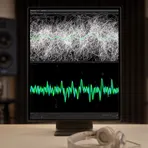
How strong the wanted signal is compared to background noise
Surface Forms
Etymology
The word signal-to-noise comes from two plain words: signal, a 'useful message' like your phone signal, and noise, a 'background sound' that hides what you want to hear. So it measures how much signal there is compared to the noise, and a higher signal-to-noise means the information is clearer.