

to sieve out


 1
5.3
1
5.3
- phrasal verb
- /siv aʊt/
- Provided the peer-review system is healthy, it will sieve out the dross and save the paydirt.
Examples
-
So we're going to sieve out the water to keep that.
-
Next, sieve out the plastic scrap, and let the Jain process convert it all to useful oxygenated carbon compounds.
Fiction book (1998) -
After cooking the pasta, remember to sieve out the excess water before serving.
-
She will sieve out the small stones from the flour to ensure it is smooth.
-
To ensure a clear broth, it's important to sieve out the vegetable pieces after simmering.
Synonyms
 138
3.0
138
3.0
To pass something through a device that removes unwanted parts
 81
4.3
81
4.3
Remove waste or harmful substances from the body
 37
3.8
37
3.8
To remove unwanted people or things from a group
 30
4.6
30
4.6
To remove dirt and bad chemicals from water or air to make them clean
 20
3.8
20
3.8
To remove unwanted things from water, air, or lists by letting the rest pass
 12
2.5
12
2.5
To put flour through a sieve to remove lumps
 9
4.3
9
4.3
To check and remove people or things that are not wanted
 7
3.7
7
3.7
Remove one part from a mixture using a filter or another method
 2
3.6
2
3.6
To look through items carefully to choose the best or remove bad ones
 1
6.8
1
6.8
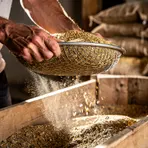
Remove small bits and dirt from grain using a sieve
 1
4.4
1
4.4
To choose some items from a group and separate them from others
 1
5.8
1
5.8
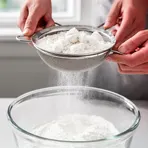
Pass a powder or liquid through fine mesh to remove lumps
 1
7.1
1
7.1
Remove people or things from a group because they are not suitable
 1
9.9
1
9.9
To sift grain or flour through a coarse sieve

To remove solid parts from a liquid or gas using a filter
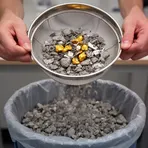
To remove unwanted things so only useful ones remain

To remove unwanted parts from something after checking it carefully
Antonyms

How Thorough
 37
3.8
1
5.3
20
3.8
∞
1.5
237
2.0
37
3.8
1
5.3
20
3.8
∞
1.5
237
2.0
Surface Forms
Morphology
The meaning 'to remove or separate by passing through a sieve' is directly and predictably derived from combining 'sieve' (to pass through a mesh to remove lumps) with the particle 'out' (indicating removal/separation). This verb+particle composition is a common, cross-linguistically transparent pattern, so a B1 learner familiar with both constituents should be able to infer the MWE meaning.
Etymology
Sieve out comes from the simple image of using a sieve: you shake a mix so the small bits fall out through the holes while the larger or unwanted pieces stay behind. So, to sieve out something means 'to separate' or 'remove' the unwanted parts from a group or mixture.