
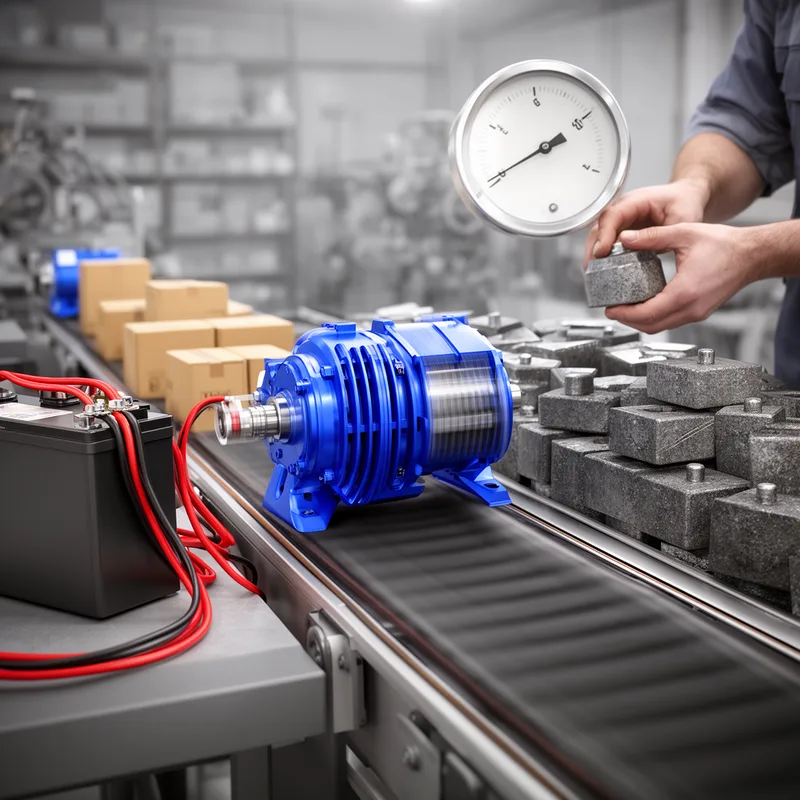
shunt DC motor
- noun
- /ʃʌnt diː siː ˈmoʊtər/
- Specialized
- A shunt DC motor maintains nearly constant speed under varying loads.
Examples
-
Unlike a series DC motor, a shunt DC motor is preferred for its stable operation in industrial settings.
-
The technician recommended installing a shunt DC motor for better control over machine speed.
-
A shunt DC motor is often used in model trains.
-
Many engineers prefer shunt DC motors for their reliability.
-
A shunt DC motor provides excellent speed regulation even when the load changes.
-
In robotics, a shunt DC motor allows precise control of movement and speed.
-
For consistent performance, many applications utilize a shunt DC motor instead of a series motor.
Synonyms


 1
3.9
1
3.9
A machine that uses electricity from a battery to make parts turn
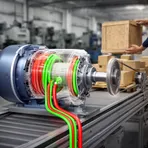
A direct current motor whose parts are connected in parallel to keep a steady speed when the load changes
How Regulated

Surface Forms
Morphology
The phrase is compositional: 'shunt' (a conductor placed in parallel) modifies 'DC motor', so the expression denotes a DC motor with a parallel/shunt connection. Although technical, this meaning follows regular noun-modifier composition and would be inferable to a learner who knows 'shunt', 'DC', and 'motor'.
Etymology
Shunt DC motor comes from the word shunt, which means a 'side path', and DC means 'direct current'. In this motor some electricity runs along that side path next to the main circuit, so the machine keeps a steady speed when the load changes.