
seroconversion


 1
8.3
- noun
- /ˌsɪəroʊkənˈvɜrʒən/
- Specialized
- Among newly infected women, the median time to seroconversion is approximately 8 months (20, 21).
- seroconversion rate
- HIV seroconversion
- antibody seroconversion
Examples
-
Virus infection was considered confirmed if seroconversion from negative to positive could be documented.
Academic text (2012) -
Of 20 analyzed patients, seroconversion was observed in 6 patients.
Academic text (2012) -
Some studies reported 80% seroconversion by this route.
Academic text (2007) -
Only 17% responded to the lower dose, and the spontaneous seroconversion rate without therapy was only 7%.
Academic text (1994) -
The seroconversion percentage in 2004 was, however, greater than the percentages in 2000 through 2002.
Academic text (2006) -
In the Singapore study, TIV was not protective against seroconversion among community participants.
Academic text (2012) -
In 2004, the highest IgM seroconversions to EEE occurred later in August.
Academic text (2006) -
There is no general serological screening tool to detect seroconversions against all enteric viruses.
Academic text (2002) -
Most (87%) remain HBeAg negative, and seroconversion to HBsAg negativity continues in two-thirds of these after treatment is complete.
Academic text (1994) -
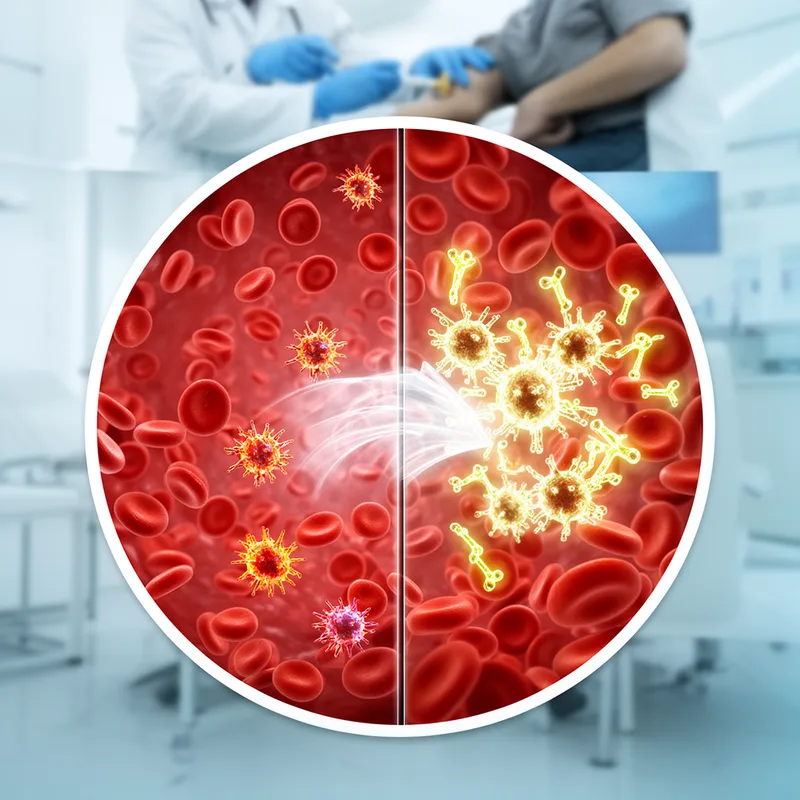
Seroconversion occurs when the body begins to produce seroconversion in response to an infection.
How Seropositive

Surface Forms
Morphology
seroconversion = conversion (semi-transparent) = sero + convert + ion
The combining form 'sero-' denotes serum and 'conversion' means change, but 'sero-' is a medical/bound form not widely known to general learners.
Etymology
Seroconversion comes from the parts sero- meaning 'serum', the clear part of the blood, and conversion meaning 'a change', like the word convert. So seroconversion is the moment the blood shows a clear change when antibodies appear after an infection or a vaccination.